



How to Build Muscle After 50 (Without Beating Up Your Joints)
You can build muscle after 50. You just can't train the way you did at 25 and expect your knees, shoulders and lower back to sign off on it.
The good news is that the fix isn't complicated. Train the big movements two or three days a week, pick resistance that's hard but controllable, add a little more over time, eat well and give yourself time to recover. That's most of it.
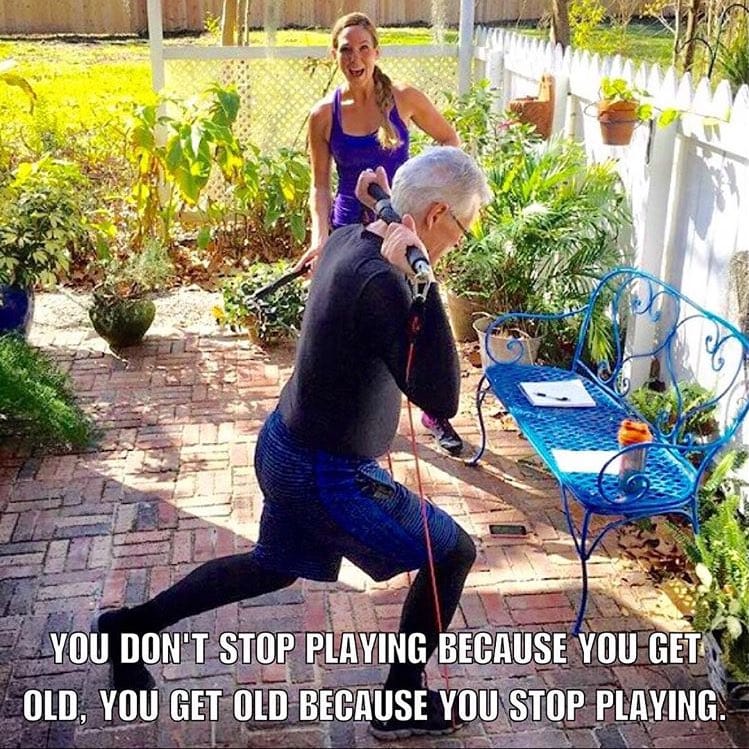
This guide walks through each piece, gives you a simple plan you can start this week, and explains why a lot of men over 50 are swapping heavy dumbbells for bands.
A quick note before you start: if you have a heart condition, a recent injury or surgery, or joint pain that's getting worse, talk to your doctor or physical therapist first.
Can you really build muscle after 50?
Yes. This one isn't opinion.
A 2011analysis in Medicine and Science in Sports and Exercise pooled 49 studies and 1,328 adults aged 50 to 83. After an average of about 20 weeks of resistance training, participants gained an average of 1.1 kg (about 2.4 lb) of lean body mass (Peterson, Sen & Gordon, 2011).
That's an average across very different programs, so your number will be different. But the takeaway is: muscle still responds to training in your 50s, 60s and beyond. What changes is how you get there.
What changes after 50 (and what doesn't)
What doesn't change: muscle grows when you challenge it, recover, and challenge it again a little harder. Same rules as always.
What does change is the margin for error.
- Recovery takes longer. A workout that used to leave you sore for a day might hang around for two or three.
- Joints and tendons are less forgiving. They tend to complain at the bottom of a lift, where your knees and shoulders are bent and carrying the most stress.
- A layoff costs more. Most men don't quit because they're lazy. They quit because something starts aching, they take a week off, and the week turns into a year.
So the goal after 50 isn't just to train hard. It's to train in a way you can keep doing for years.
The 5 rules for building muscle after 50
1. Train the big movements two or three days a week.
The CDC recommends muscle-strengthening activity at least 2 days a week for adults 65 and older (CDC). For building muscle, two or three full-body sessions a week, with a rest day between them, is a sensible place to start. If you need more time to rest, take it!
2. Pick six moves that cover the whole body.
Squat, deadlift, row, chest press, overhead press, curl. Those six work your legs, hips, back, chest, shoulders and arms. You don't need 20 exercises. You need a handful you'll do consistenty.
3. Make the last few reps count, not ugly.
A set should end with one to three good reps left in the tank. If your form breaks down, or a joint starts hurting (not just your muscles burning), stop the set. Pain isn't a sign the workout is working.
4. Add a little at a time.
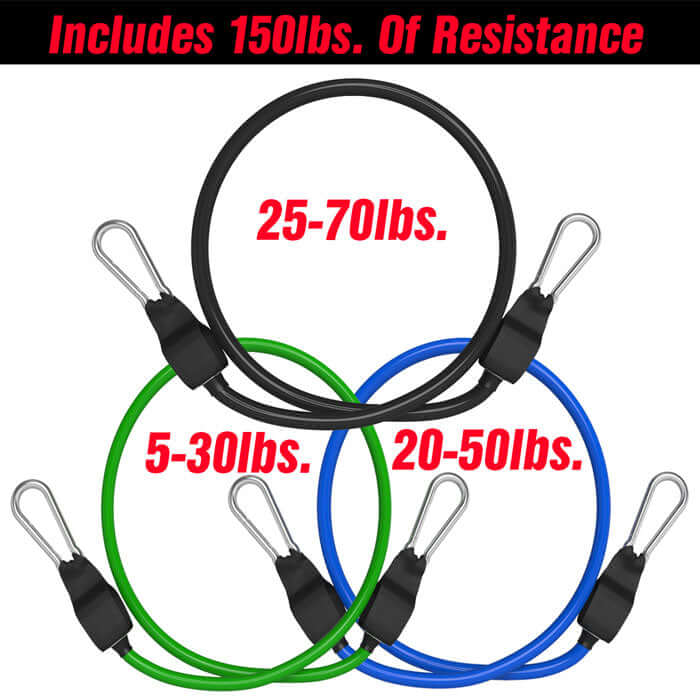
When you can max out your reps with clean form, make it harder: a heavier band, a shorter band setup, or an extra set. Small steps, every week or two.
5. Go light where you're weak and heavy where you're strong.
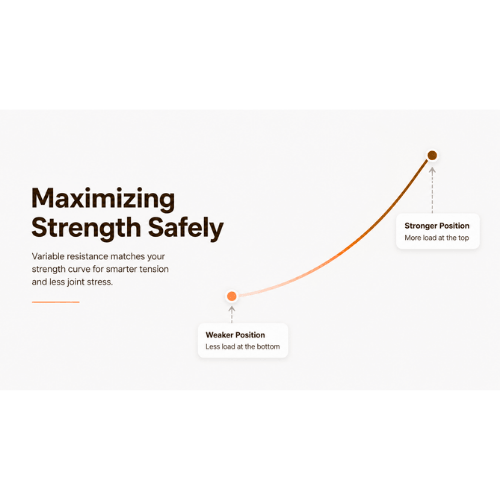
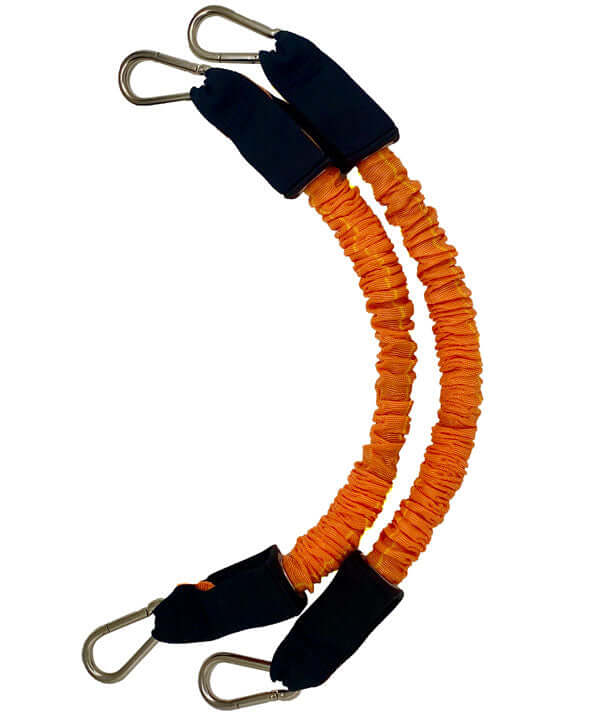
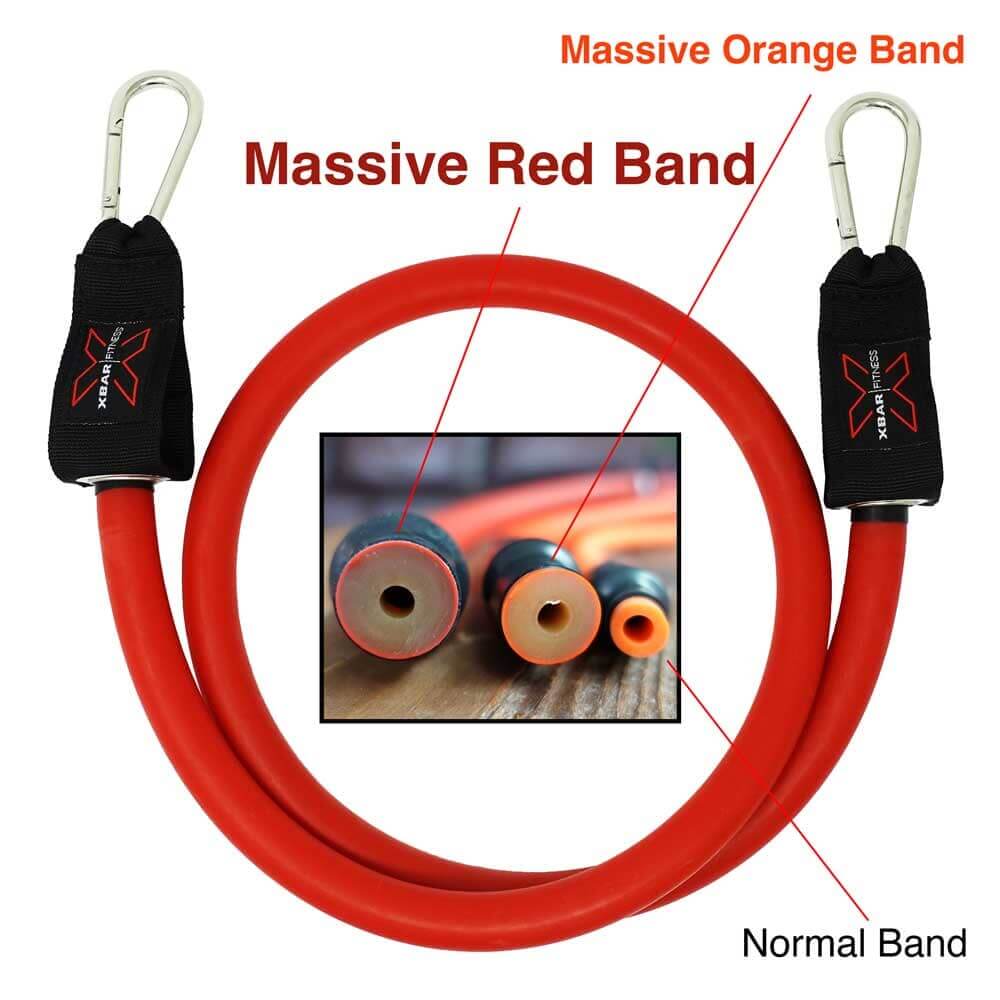
Every lift has a weak spot (the bottom) and a strong spot (near the top). A dumbbell weighs the same the whole way, so if it's heavy enough to challenge you at the top, it's probably too heavy for your joints at the bottom. Resistance bands do the opposite: they're lightest at the bottom and get heavier as they stretch. That's called variable resistance, and it lets you load your muscles hard without grinding your joints through their weakest position. (Here's the science behind it.)
A simple 3-day plan to start this week
Do the same six moves each session: Monday, Wednesday and Friday, or any three days with a rest day between them. Rest 60 to 90 seconds between sets.
| Weeks | Sets × reps | Resistance | Focus |
|---|---|---|---|
| 1–2 | 2 × 15–20 | Light band | Learn the moves; slow, controlled reps |
| 3–4 | 3 × 12–15 | Light to medium | Same form, more total work |
| 5–8 | 3 × 8–12 | Medium to heavy | Make the last reps more difficult |
| 9+ | 3–4 × 8–12 | Heavier bands or combinations | Keep adding a little every week or two |
The six moves:
- Squat: stand on the band, bar across your shoulders, sit back and down. (How to do band squats with good form)
- Deadlift: stand on the band, hinge at the hips with a flat back, stand tall.
- Row: anchor the band at chest height, pull the bar to your ribs. (Band rows, step by step)
- Chest press: anchor behind you at chest height, press forward. (Band chest press guide)
- Overhead press: stand on the band, press the bar overhead. Use a grip angle your shoulders like.
- Curl: stand on the band, curl the bar to your shoulders.
The whole session takes about 30 to 40 minutes, including a short warm-up.
How much protein do you need after 50?
Training is the signal. Protein is the raw material.
An international expert group (PROT-AGE) recommends that healthy adults over 65 eat at least 1.0 to 1.2 g of protein per kg of body weight per day, and 1.2 g/kg or more if they exercise (Bauer et al., 2013).
For a 200 lb man (about 91 kg), 1.0 to 1.2 g/kg works out to roughly 90 to 110 g of protein a day. Spreading it across three meals is easier than trying to hit it in one.
If you have kidney disease or another condition that affects your diet, check with your doctor before raising your protein.
Recovery: the part most men skip
After 50, recovery is where a lot of the progress happens.
- Keep a rest day between sessions. Three days a week is plenty to start.
- Sleep. Short nights make every workout feel harder.
- Know soreness from pain. Muscle soreness that fades in a day or two is normal. Sharp pain, or joint pain that lingers or gets worse, is a reason to back off and get it checked.
- Back off before you have to. Every fourth or fifth week, drop to two sets. You'll come back stronger and less beat up.
Weights, bands or a bar: what should you use?
You can build muscle with any of them. Research comparing elastic resistance with conventional weights found similar strength gains (Lopes et al., 2019). The better question is which one you'll use consistently without your joints talking you out of it.
| Option | Good at | Watch out for |
|---|---|---|
| Dumbbells | Precise loading; easy to track | Heaviest where joints are weakest; a full set takes space and money |
| Loose bands | Cheap; portable | Awkward to load heavy; hard to grip for presses and squats |
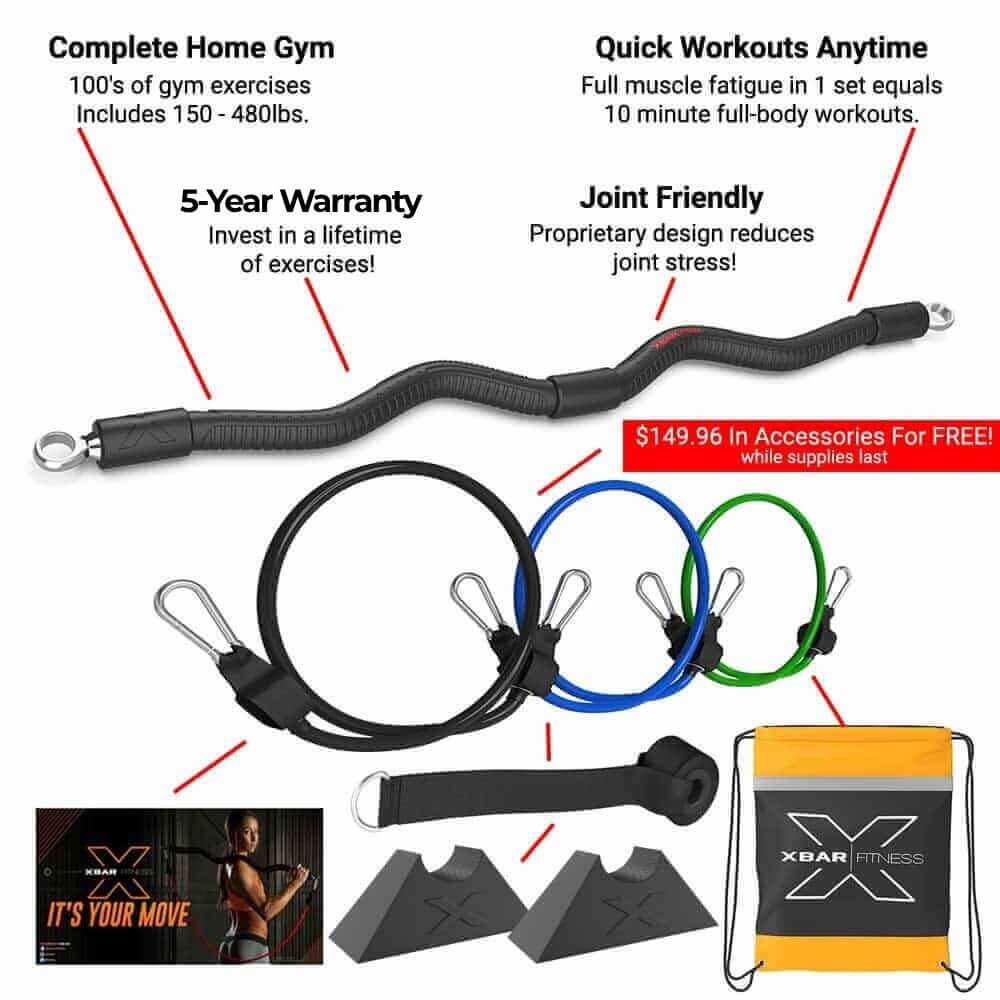
| A bar with bands | Heavy band resistance on barbell-style lifts; lighter at the bottom of each rep | You'll need a sturdy door for anchored moves |
If you want the third option, that's what we built XBAR for. It's a bar-and-band system designed for big lifts like squats, rows and presses. See how it works on our strength training for men over 50 page. (And if you're weighing bands against weights in general, read Resistance Training After 35: Why Bands Beat Weights.)
FAQ
Is it too late to build muscle at 60 or 70?
No. The studies in the 2011 included adults up to 83. Start lighter, progress slower and give yourself more recovery time.
How long until I see results?
Most men notice they're stronger within a few weeks. Visible muscle takes longer. The studies above averaged about 20 weeks. Consistency matters more than any single workout.
Do I need to lift heavy?
You need to lift hard, which isn't the same thing. Sets that end one to three reps short of failure work across a range of loads. That's why bands are a good fit: you can make a set hard without stacking heavy weight on your joints.
Do I need a gym?
No. A bar, a few bands and a door anchor cover all six moves in this plan.
Start this week
Pick three days. Do the six moves. Start lighter than you think you need to, and add a little every week or two. That's how you build muscle after 50: not with one heroic workout, but with a plan you can keep doing.
When you're ready for equipment built for exactly this, see the XBAR kits for strength training after 50.