




Achilles Tendon Injuries Are Rising. Here's How Resistance Training Can Help Build Stronger Tendons
New research shows Achilles tendon ruptures have increased significantly over the past several decades, especially among men ages 30–49. Here's what the science says about strengthening your calves, building tendon resilience, and why resistance bands deserve a place in your routine.
There's a particular moment in sports that nobody wants to experience.
An athlete accelerates, plants a foot, and suddenly collapses. They turn around, almost expecting to see someone who kicked them from behind.
Nobody did.
It was their Achilles tendon.
We've seen this scene play out with professional athletes, weekend basketball players, recreational runners, and otherwise healthy adults who simply pushed off the wrong way at the wrong moment.
And according to a major 2026 study, these injuries aren't just receiving more attention.
Achilles tendon ruptures really are becoming more common.
And particularly for active adults in their 30s and 40s. But it raises an important question that deserves more attention than the injuries themselves:
What are we doing to prepare our muscles and tendons for the physical demands we place on them?
Because while no exercise can guarantee protection from an Achilles rupture, research offers a reason to take progressive lower-leg strengthening seriously.
And you don't need a gym full of equipment to get started.
Achilles Tendon Injuries Are Increasing. The Numbers Tell the Story.
A 2026 review and meta-analysis published in Sports Medicine examined 28 population-based studies spanning more than six decades, representing over 630 million people and approximately 563,000 Achilles tendon ruptures.
The findings were difficult to ignore.
Researchers found that Achilles tendon ruptures increased at an average annual rate of approximately 2.7%, rising from roughly 6 cases per 100,000 people in 1979 to approximately 31 per 100,000 in 2021.
Men experienced more than three times the incidence observed in women.
And perhaps the most surprising finding?
The highest incidence among men occurred between ages 30 and 49.
Not among the oldest adults. Not exclusively among elite professional athletes.
Men in an age range when many are still playing recreational sports, running, lifting weights, and balancing physical activity with demanding careers and family responsibilities.
Approximately 68% of reported Achilles ruptures were associated with sports, particularly activities involving sudden acceleration, cutting, jumping, and rapid changes in direction.
The data does not prove exactly why rupture rates are increasing. Changes in activity patterns, population characteristics, and other factors may contribute. Nor does it establish that any particular strengthening program prevents ruptures.
But it reinforces something worth considering:
Being active is not necessarily the same as being physically prepared.
You can play basketball every weekend and still have gaps in your strength training. You can run several miles without deliberately strengthening your calf muscles through a full range of motion.
And you can feel perfectly healthy right up until your body encounters a demand it cannot tolerate.
Research: Kotsifaki et al. (2026). Incidence, Temporal Trends, and Surgical Shift of Achilles Tendon Rupture: A Systematic Review and Meta-analysis. Sports Medicine.
Your Achilles Tendon Does More Work Than You Probably Realize
Most people think about their calves when they're trying to build stronger legs.
They think about squats, lunges, and maybe a few calf raises at the end of a workout.
But the Achilles tendon rarely gets the same attention.
That's an oversight.
The Achilles is the thick, powerful tendon that connects your calf muscles to your heel bone. It plays a critical role in walking, running, jumping, climbing stairs, and pushing off the ground.
Every time you take a step, your calf muscles and Achilles tendon work together to transfer force.
Two muscles are particularly important:
- Gastrocnemius: The larger, more visible calf muscle that contributes to powerful movements and works across both the knee and ankle.
- Soleus: The deeper calf muscle that contributes to ankle plantar flexion, particularly when the knee is bent, and supports standing, walking, and endurance activities.
Both muscles connect to the Achilles tendon.
The distinction matters because the lower leg isn't a single muscle performing a single function.
Strengthening only one movement, or only one portion of the calf musculature, may leave important capacities underdeveloped.
A comprehensive lower-leg program should include exercises that challenge the calves with both straight and bent knees, along with appropriate ankle strength and control.
Not because every exercise directly prevents injury, but because these muscles help generate and tolerate the forces involved in everyday movement.
And when it comes to maintaining strength as we age, the muscles we consistently overlook can become the ones that limit us.
Strong Calves and Resilient Tendons Aren't Exactly the Same Thing
Here's where the conversation becomes more interesting.
Muscles and tendons work together, but they're not the same tissue.
Muscles actively contract to produce force. Tendons transmit that force to bones while also storing and releasing elastic energy during movement.
Both adapt to training.
But the adaptations don't necessarily happen at identical rates, and being strong in one exercise doesn't mean you're automatically prepared for every physical demand.
For example, someone may have enough calf strength to perform repeated raises on flat ground but lack the conditioning needed for explosive jumping, repeated sprinting, or sudden changes of direction.
That's because these activities involve different combinations of force, speed, and tissue loading.
The answer isn't simply to train harder.
It's to train progressively.
Start with a level of resistance your body can manage, establish control, and increase the challenge as your strength and tolerance improve.
This is the same principle behind progressive overload in traditional strength training.
And it's especially relevant when training tendons.
The Science Supports Progressive Tendon Loading
The American Physical Therapy Association's 2024 clinical practice guideline for midportion Achilles tendinopathy recommends tendon-loading exercise as a first-line treatment, with loading adjusted to the individual's tolerance.
Research also supports structured resistance exercise, including eccentric training and heavy, slow resistance training, for improving pain and function in people with Achilles tendinopathy.
Eccentric exercise emphasizes the lowering phase of a movement, when a muscle lengthens while producing force.
Heavy, slow resistance training challenges the muscle-tendon system with controlled movement under increasing load.
Both approaches demonstrate an important principle:
Appropriately dosed mechanical loading is part of building and restoring tendon capacity.
There's an important distinction, though. Much of this clinical research concerns treatment of existing tendinopathy, not proof that a particular exercise prevents a first-time Achilles rupture.
Still, it gives us a scientifically grounded reason to strengthen the lower leg instead of ignoring it until something hurts.
Research: APTA Achilles Tendinopathy Clinical Practice Guideline (2024); Comparability of Different Types of Exercise in Achilles Tendinopathy: Systematic Review.
Where Resistance Bands Fit Into Achilles Tendon Strengthening
When most people think of resistance training, they picture barbells, dumbbells, or heavy machines. You know, that big squat rack in the corner...yeah, that one.
Those tools can certainly strengthen the calves and load the Achilles tendon.
But they aren't the only options.
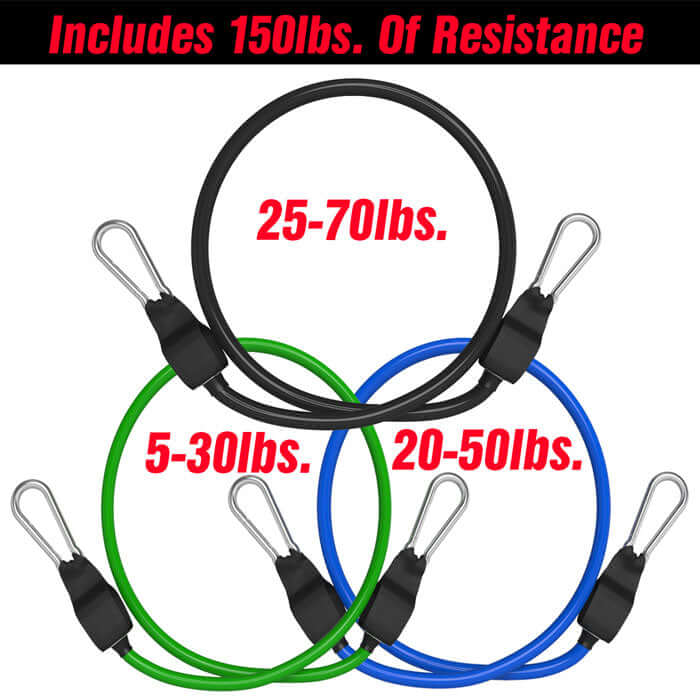
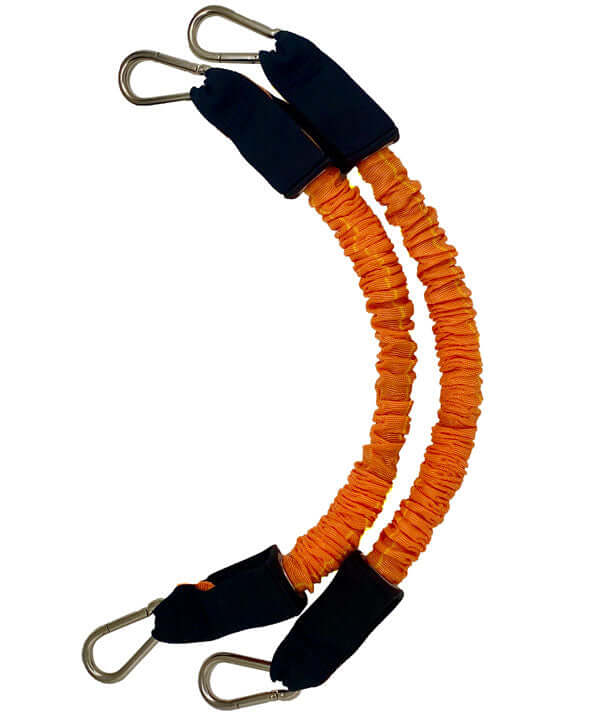
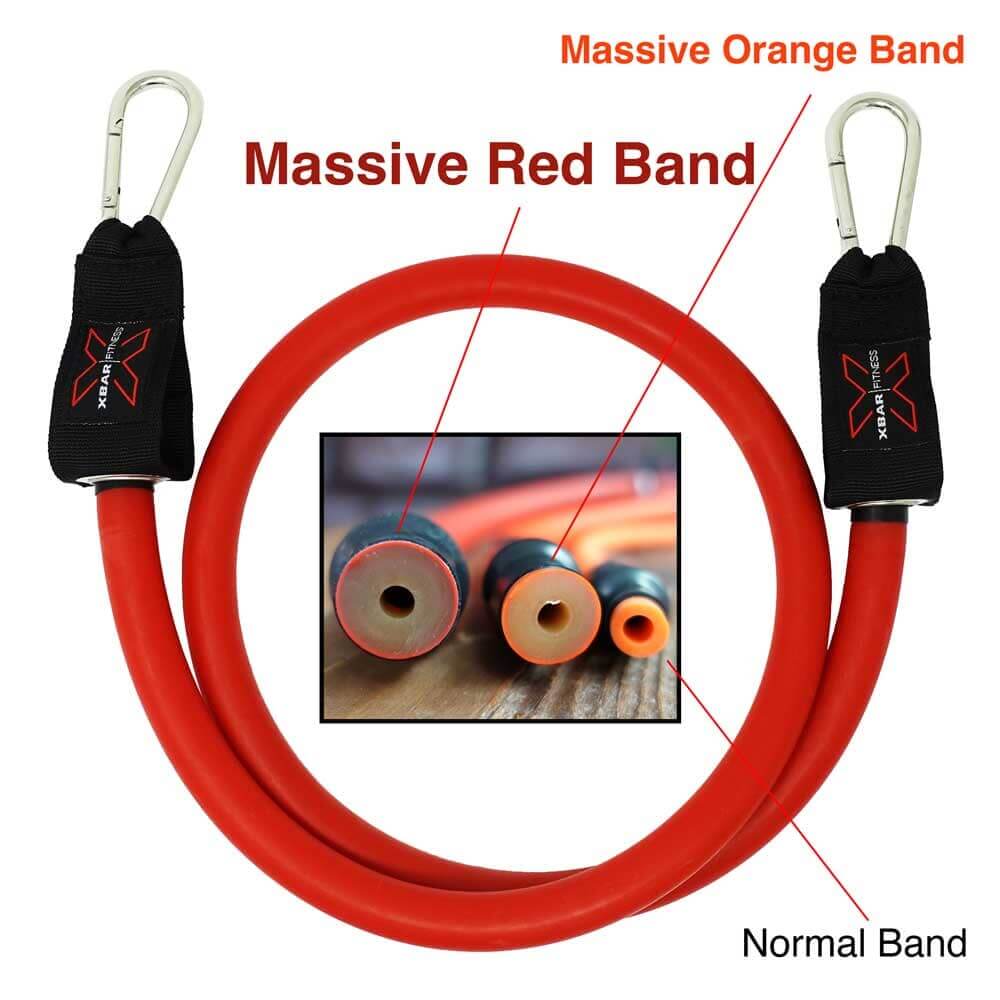
Resistance bands provide another way to challenge the muscles responsible for ankle movement, with several practical advantages that make them useful for building a consistent routine.
Resistance You Can Start With and Gradually Increase
A resistance band allows you to begin with relatively light resistance and progress to more challenging tension as you become stronger.
That's useful for people who haven't trained their calves directly, are returning to regular exercise after a period of inactivity, or want to add focused lower-leg work to an existing routine.
You can adjust the band, the amount of stretch, the number of repetitions, or the resistance level.
The goal isn't to make every exercise as difficult as possible.
It's to find a challenging but manageable starting point, and build from there.
More Ways to Train Ankle Movement
Traditional standing calf raises are valuable, but resistance bands make it convenient to train additional movements.
These include plantar flexion, inversion, and eversion. These movements involve the calf muscles and other muscles supporting the ankle and foot.
Not every one of these exercises loads the Achilles tendon equally.
Band-resisted ankle movements can help develop accessory strength and control, while progressive calf raises are generally more central to building substantial Achilles-loading capacity.
The two approaches complement each other.
Strength Training Without a Complicated Setup
There's another advantage that's easy to underestimate.
Convenience.
You don't have to drive to a gym or wait for a machine to become available to spend a few minutes strengthening your calves and ankles.
You can do controlled resistance exercises at home, while traveling, or alongside your existing workout.
And consistency matters more than an elaborate setup you rarely use.
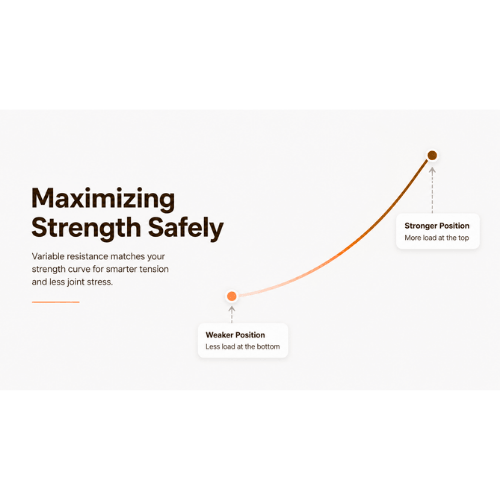
One caveat: because band tension varies with stretch length, resistance bands do not automatically provide the same loading stimulus as heavy calf raises. For some people, bands will be an excellent starting point; progressively heavier bodyweight or external resistance may eventually be necessary.
The goal isn't to prove bands are better than weights. It's to make effective strength training easier to start, progress, and maintain.
Five Exercises to Build Stronger Calves and Ankles
The following five exercises are designed for adults without a current Achilles injury who want to improve lower-leg strength and control.
They combine resistance band movements with calf-loading exercises that can be progressed over time.
You don't need to perform all five every day. Start conservatively, focus on movement quality, and allow time for recovery.
Important: If you have current Achilles pain, a suspected tendon injury, or are recovering from a rupture or surgery, seek guidance from an appropriately qualified healthcare professional before beginning.
1. Seated Resistance Band Plantar Flexion
Primary focus: Calf muscles and controlled ankle strength.
This is a straightforward way to introduce resistance to the muscles that point your toes downward.
How to perform it:
- Sit on the floor with one leg extended in front of you.
- Loop a resistance band around the ball of your foot and hold both ends securely.
- Begin with your ankle in a comfortable, neutral position.
- Slowly point your toes away from your body against the band's resistance.
- Return to the starting position under control.
Suggested starting point: 2 sets of 12–15 repetitions per foot.
Avoid snapping back or allowing the band to pull your ankle suddenly.
This movement can introduce calf resistance with relatively modest loading, making it useful before progressing to more demanding exercises.
2. Standing Calf Raises With Controlled Lowering
Primary focus: Gastrocnemius, soleus, and Achilles loading.
Standing calf raises are one of the most practical exercises for training the calf-Achilles complex.
How to perform it:
- Stand with your feet approximately hip-width apart.
- Use a countertop or sturdy support for balance.
- Slowly raise both heels off the floor.
- Pause briefly at the top.
- Lower your heels over approximately 2–3 seconds.
Suggested starting point: 2 sets of 8–12 repetitions.
Begin with both feet. When you can perform the movement comfortably and with good control, progress toward single-leg calf raises.
Eventually, additional resistance may be appropriate.
This is an important part of tendon strengthening: as you improve, the exercise needs to remain challenging enough to encourage further adaptation.
3. Bent-Knee Calf Raises for the Soleus
Primary focus: Soleus muscle.
The soleus often gets overlooked because it sits underneath the larger gastrocnemius.
But it's a major contributor to ankle strength and endurance.
Performing calf raises with a bent knee changes the relative contribution of the calf muscles and makes it possible to emphasize the soleus.
How to perform it:
- Sit upright in a sturdy chair with your knees bent approximately 90 degrees.
- Place your feet flat on the ground.
- Keeping the balls of your feet planted, slowly lift your heels.
- Pause at the top.
- Lower under control.
Suggested starting point: 2 sets of 12–15 repetitions.
Once this becomes easy, resistance can be added safely across the thighs near the knees, using an appropriate weight or setup.
The movement may look simple, but slow, progressively loaded soleus training deserves a place in a well-rounded lower-leg program.
4. Slow Eccentric Heel Lowering
Primary focus: Controlled eccentric calf and tendon loading.
Eccentric training has been studied extensively in Achilles tendinopathy rehabilitation.
The concept is straightforward: emphasize the phase when the calf muscles control the lowering of your body.
How to perform it:
- Stand on a flat, stable surface near a support.
- Rise onto your toes using both feet.
- Shift a manageable portion of your weight toward one leg.
- Slowly lower your heels, taking approximately 3 seconds.
- Reset using both legs.
Suggested starting point: 2 sets of 6–8 controlled repetitions per side, provided the movement is comfortable.
For healthy adults, progressing toward controlled single-leg lowering is one option as strength improves.
This isn't an exercise to rush or force.
And if you have pain near the Achilles attachment at the heel, avoid lowering below floor level unless a clinician has specifically advised it. Deep heel drops may aggravate insertional Achilles tendon problems.
5. Resistance Band Ankle Inversion and Eversion
Primary focus: Ankle strength and control.
Your Achilles isn't the only structure contributing to lower-leg stability.
The muscles along the inside and outside of the lower leg help control ankle movement and support the foot during changes in position.
Resistance bands offer a practical way to strengthen these muscles.
How to perform it:
- Sit with one leg extended or comfortably supported.
- Secure a light resistance band to an appropriate, stable anchor.
- For eversion, position the band so it resists the foot turning outward.
- For inversion, change the band's position so it resists the foot turning inward.
- Move slowly at the ankle without rotating your entire leg.
Suggested starting point: 2 sets of 10–12 repetitions in each direction.
The resistance should be light enough that you can maintain control throughout the movement.
These exercises primarily strengthen muscles that assist ankle control. They should supplement, rather than replace, direct calf-strengthening work.
How Often Should You Strengthen Your Achilles and Calves?
More isn't automatically better.
Tendons respond to appropriately managed loading, and recovery is part of the adaptation process.
For healthy adults new to focused lower-leg training, starting with two or three nonconsecutive strengthening sessions per week is a reasonable approach.
A simple introductory routine might look like this:
| Exercise | Starting Volume |
|---|---|
| Seated band plantar flexion | 2 × 12–15 per foot |
| Standing calf raises | 2 × 8–12 |
| Bent-knee calf raises | 2 × 12–15 |
| Slow eccentric heel lowering | 2 × 6–8 per side |
| Band inversion and eversion | 2 × 10–12 each direction |
These are introductory fitness suggestions, not a clinically validated rupture-prevention protocol.
You can begin with fewer exercises or sets if needed. The entire routine does not have to be completed in a single session.
As your control improves and the exercises become easier, increase the challenge gradually rather than simply adding more and more repetitions.
Pay attention to lingering soreness, new tendon pain, and morning stiffness.
If symptoms are increasing from session to session, that may be a sign your current training load exceeds your tolerance.
For people managing diagnosed Achilles tendinopathy, loading frequency, intensity, and progression should be individualized.
Your objective is steady improvement over months, not exhausting your calves in one workout.
The Bigger Mistake: Going From Occasional Activity to Explosive Movement
Think about how many adults approach physical fitness.
They work long hours, sit more than they'd like, and try to squeeze exercise into whatever time remains.
Maybe they lift weights a couple of times per week.
Maybe they get in a weekend basketball game.
Then, without much preparation, they ask their body to sprint, jump, stop, and change direction at full speed.
It's not difficult to see the mismatch.
One moment, your lower legs are handling ordinary daily activity.
The next, they're being asked to absorb and generate substantially greater forces at much higher speeds.
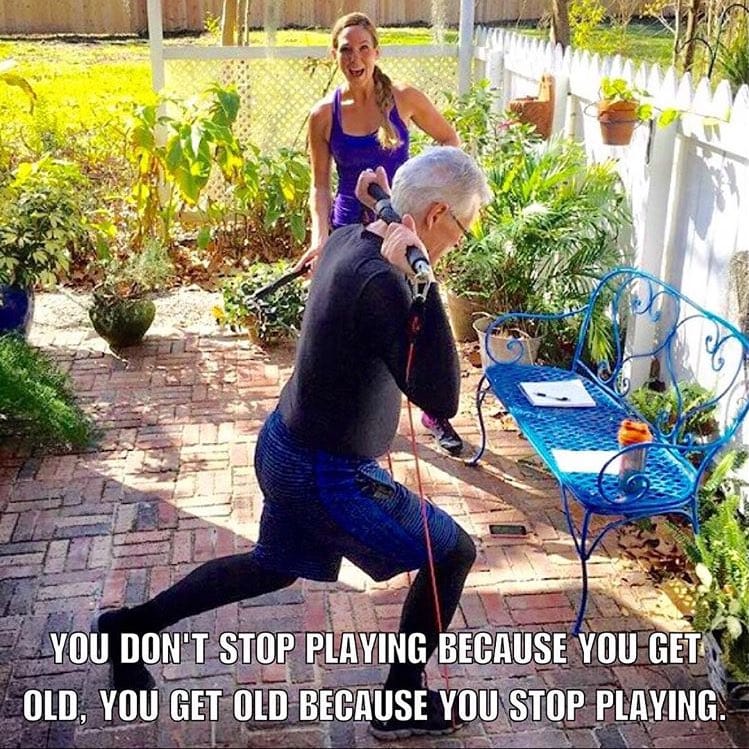
That doesn't mean you should stop playing basketball, tennis, pickleball, or recreational sports.
It means your training should reflect the demands of those activities.
Progressive calf strengthening is one part of the equation.
Adequate warm-ups, gradual increases in sports participation, appropriate recovery, and eventually sport-specific jumping and agility training may also matter.
Resistance bands can help prepare your muscles for more challenging work, but band exercises alone cannot replicate the rapid, high-force demands of competitive sports.
If you want to keep doing athletic things as you get older, you need to prepare your body for athletic demands.
Not just hope it remembers how.
Achilles Strength After 35: Think Beyond Your Next Workout
There's a broader lesson in all of this.
We spend a lot of time talking about how to build bigger muscles, burn fat, or lift heavier weights.
Far less attention goes toward maintaining the physical capacity that allows us to stay active for decades.
Strong legs help us climb stairs, carry groceries, play with our kids, hike, run, and participate in the sports we enjoy.
But strength isn't only about the muscles you see in the mirror.
It's also about the muscles, tendons, and supporting structures that help you move confidently.
As we discussed in our article on resistance training after 35, the goal of training changes for many people as they get older.
Building strength still matters.
So does keeping it.
And maintaining the ability to move well may be one of the most valuable returns on that investment.
The Achilles tendon is a good example of why this broader perspective matters.
It doesn't receive much attention when everything is working.
But it becomes impossible to ignore when something goes wrong.
Making Strength Training Easier to Sustain With XBAR
One of the biggest obstacles to consistent strength training isn't necessarily a lack of motivation.
It's friction.
Getting to the gym. Finding time. Having the right equipment. Trying to fit another workout into an already busy day.
The more complicated a routine becomes, the easier it is to skip.
That's part of the thinking behind XBAR.
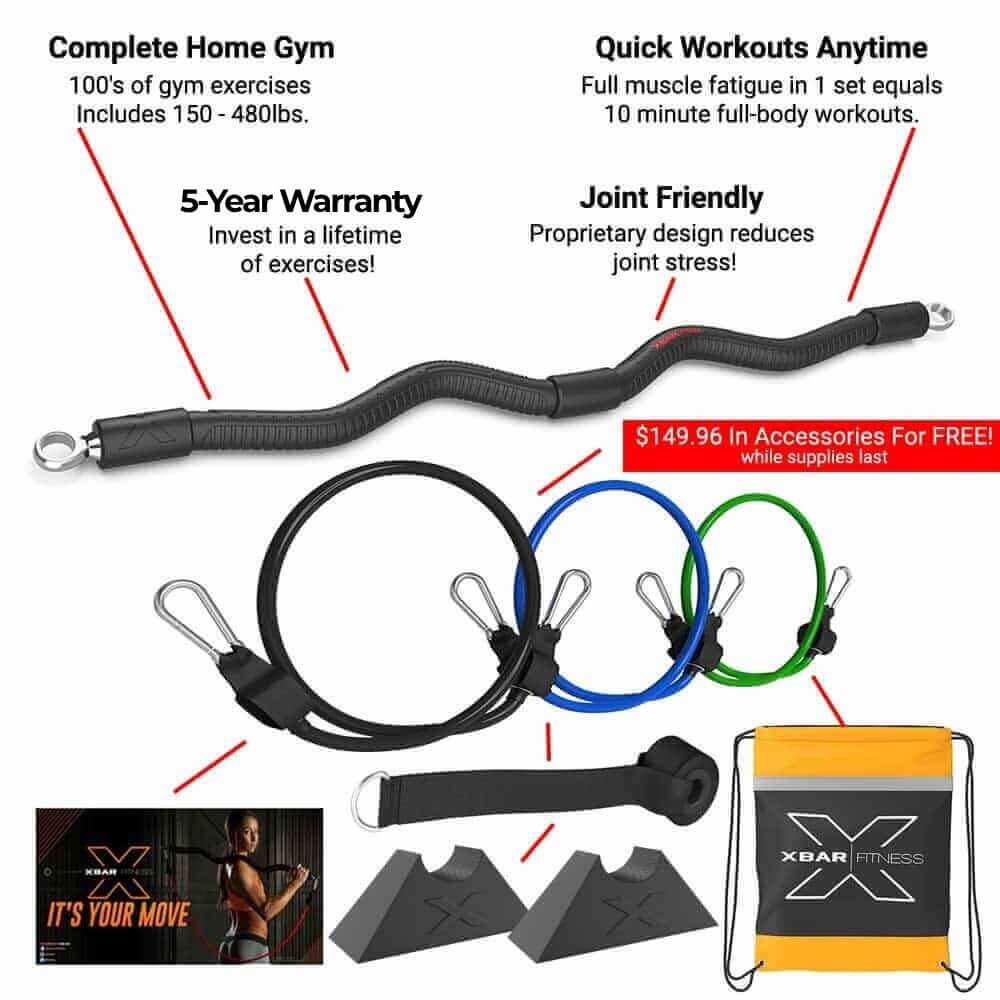
The XBAR resistance training system is designed to make strength training more accessible with a portable bar-and-band setup that can support a wide variety of strength exercises.

For lower-leg training, standalone resistance bands can be useful for exercises such as seated plantar flexion and ankle strengthening, while appropriately configured XBAR resistance exercises can complement a broader lower-body strength program.
The system doesn't replace clinical rehabilitation, and we aren't suggesting that owning XBAR prevents Achilles injuries.
The value is simpler.
Having strength-training equipment readily available can make it easier to build a routine you actually follow.
And a routine you can maintain is more useful than an ambitious program you abandon after two weeks.
That's especially relevant for adults who want to stay strong without reorganizing their lives around a gym membership.
You don't need to train like a professional athlete to take your strength seriously.
You need a practical way to challenge your body, make progress, and keep showing up.
Can Resistance Bands Actually Prevent an Achilles Tendon Rupture?
This is where we need to separate what sounds promising from what research has actually demonstrated.
Progressive resistance training can strengthen the muscles that load the Achilles tendon. Research also shows that tendon-loading exercise is useful in managing Achilles tendinopathy and that tendon properties can adapt to mechanical loading.
But that doesn't mean resistance bands—or any single exercise—have been conclusively shown to prevent Achilles tendon rupture.
Rupture risk involves multiple factors, including activity demands, prior tendon problems, age, individual health factors, and sudden changes in loading.
Some ruptures also occur without significant warning pain.
So it would be misleading to tell readers that performing a certain number of calf raises or purchasing a resistance-band system will protect them from a tear.
What we can reasonably say is this:
Developing stronger calves, improving tolerance to progressively challenging exercise, and preparing for the demands of your activities are sensible investments in lower-leg function.
That's valuable whether or not we can attach a precise injury-prevention percentage to it.
Know When Strengthening Isn't the Right First Step
If you experience a sudden pop or snapping sensation near the heel, acute pain, marked swelling, or difficulty pushing off your foot, stop exercising and seek prompt medical evaluation.
Achilles ruptures aren't always accompanied by severe pain, and some people can still walk despite a significant injury.
Persistent tendon pain, swelling, or pronounced morning stiffness also deserves attention, particularly if symptoms are worsening.
If a clinician has diagnosed Achilles tendinopathy, the appropriate exercise program may differ depending on the location and severity of your symptoms.
Training through a suspected rupture is not toughness.
It's a bad decision.
The Bottom Line: Build Strength Before You Need It
The latest research on Achilles tendon ruptures should get our attention.
Not because everyone who plays recreational sports is destined for injury.
And not because we should become afraid of running, jumping, or remaining active as we age.
Quite the opposite.
It should encourage us to take physical preparation seriously.
Our bodies are remarkably adaptable, but adaptation requires the right stimulus, adequate recovery, and consistency.
The muscles that support your Achilles tendon are trainable.
Your lower-leg strength can improve.
And a thoughtful resistance-training program can help develop the capacity needed for the activities you enjoy.
Resistance bands are one practical way to begin that process, especially when convenience and consistency have been standing between you and regular strength training.
But whether you use bands, bodyweight, free weights, or a combination of all three, the principle remains the same:
Don't wait until strength becomes a problem to start building it.
Because the real goal isn't simply to get through your next workout.
It's to keep moving, keep getting stronger, and keep doing the things you enjoy for years to come.
And that's a much better reason to train.
Frequently Asked Questions For Strengthening Your Achilles Tendon
Can resistance bands strengthen the Achilles tendon?
Resistance bands can strengthen the calf muscles that transmit force through the Achilles tendon. Appropriately progressed loading may support tendon adaptation, although band exercises do not necessarily provide sufficient resistance for every person's long-term strength goals.
What exercises are best for strengthening the Achilles tendon?
Progressive standing calf raises, bent-knee calf raises, and controlled eccentric or heavy, slow resistance exercises are commonly used to strengthen the calf-Achilles complex. The most appropriate exercises depend on your current strength, symptoms, and training goals.
Can strengthening your calves prevent an Achilles rupture?
Calf strengthening improves muscle strength and may improve tendon loading capacity, but research has not established that a specific calf exercise program reliably prevents Achilles ruptures. Strength training should be part of broader physical preparation, not treated as a guarantee against injury.
How often should I train my calves and Achilles tendon?
For otherwise healthy beginners, two or three nonconsecutive lower-leg strengthening sessions each week can be a reasonable starting point. Training frequency should be adjusted according to workload, recovery, and individual tolerance. People with Achilles pain or diagnosed tendinopathy may require a different program.
Are resistance bands better than weights for Achilles strengthening?
Neither is universally better. Resistance bands offer portable, adjustable resistance for introductory exercises and ankle strengthening. Bodyweight and heavier external resistance can provide higher loads that may be necessary for progressive calf and tendon training.
Should I exercise if my Achilles tendon hurts?
Persistent Achilles pain should be evaluated by a healthcare professional. Structured loading can be helpful for certain forms of tendinopathy, but the appropriate exercises depend on the diagnosis. Sudden pain, a pop, or difficulty pushing off may indicate a rupture and requires prompt medical attention.
Research and References
- Kotsifaki et al. (2026). Incidence, Temporal Trends, and Surgical Shift of Achilles Tendon Rupture: A Systematic Review and Meta-analysis. Sports Medicine.
- Chimenti et al. (2024). Achilles Pain, Stiffness, and Muscle Power Deficits: Clinical Practice Guideline. Journal of Orthopaedic & Sports Physical Therapy.
- Prudêncio et al. (2023). Eccentric Exercise in the Treatment of Midportion Achilles Tendinopathy. BMC Sports Science, Medicine and Rehabilitation.
- Effect of Resistance Exercise Dose Components for Tendinopathy Management. British Journal of Sports Medicine.
- American Academy of Orthopaedic Surgeons. Achilles Tendon Rupture (Tear). OrthoInfo.
Medical disclaimer: This article is intended for general educational purposes and is not medical advice, a diagnosis, or an individualized rehabilitation program. Consult a qualified healthcare professional before beginning exercise if you have an existing injury, persistent pain, or a relevant medical condition.