




How to Do Resistance Band Squats With Proper Form
By applying elastic tension to an already-familiar motion, resistance band squats make a simple squat noticeably more challenging in the correct areas. No barbell, no rack, no gym membership required, just a band around your legs.
This guide covers what banded squats are, why they work, step-by-step form, common variations, mistakes to avoid, and simple programming. You will leave with everything needed to squat confidently with a band in hand, whether you train at home, at the gym, or in a hotel room on the road.
What Are Resistance Band Squats?
Resistance band squats, often called banded squats, are squats performed with added elastic resistance from a mini band, loop band, or long resistance band. They typically sit above the knees, around the thighs, under the feet, or across the shoulders.
Resistance bands provide variable resistance, meaning tension increases the moment the band stretches. That rising curve gives the squat pattern an extra challenge exactly where your muscles are already working hardest, without needing a single weight plate.
A tiny mini band placed above the knees provides instant feedback and requires little in the way of setup, making it an ideal choice for beginners. More experienced lifters gradually shift toward longer bands and heavier tension as their control improves.
Why Resistance Band Squats Work
Bands add useful feedback and real resistance without requiring heavy external weight or a full rack of equipment. They are not magic, but they genuinely sharpen control and engagement throughout the entire squat pattern.
That sharpened control matters most for lifters relearning proper squat mechanics after time away from training or for anyone building confidence before adding real load.
Glutes and hips
Throughout the movement, small bands fastened over the knees signal the user to push their knees outward. That outward tension increases hip engagement and reinforces better knee tracking on every rep.
Quads and hamstrings
The squat pattern itself still trains the major lower-body muscles regardless of band placement. Quads and hamstrings handle most of the actual lowering and standing work throughout each repetition.
Core and balance
You can keep the entire movement stable even when you add tension by bracing your core and keeping your posture tall. That stability becomes even more important once band resistance increases toward the top of the squat.
Apeer-reviewed study published on the National Institutes of Health's PMC platform examined band placement and stiffness during squats. The stiffest band positioned around the forefeet increased gluteus medius activity by 83% and gluteus maximus activity by 68% compared with squatting without a band.
Rebecca Ditwiler, DPT, is an associate professor at the University of South Florida School of Physical Therapy. She has explained that band resistance increases steadily as the band stretches.
That steady increase makes bands a useful form cue and a genuine training tool for building lower-body strength at any age or fitness level.
How to Do Resistance Band Squats With Proper Form
Good banded squat form starts with the right band, a stable stance, and controlled motion throughout the squat. Each element below builds directly on the one before it.
Choose the band
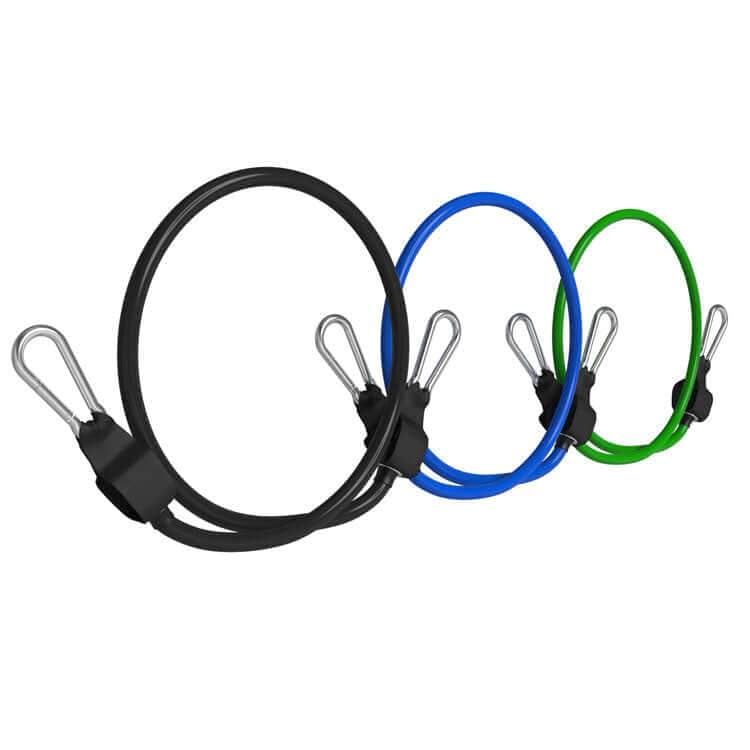
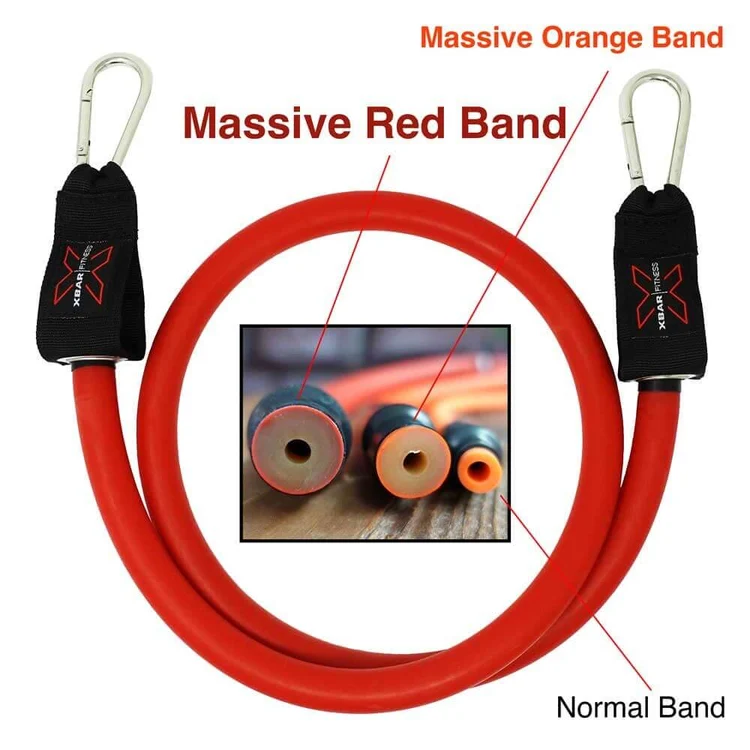
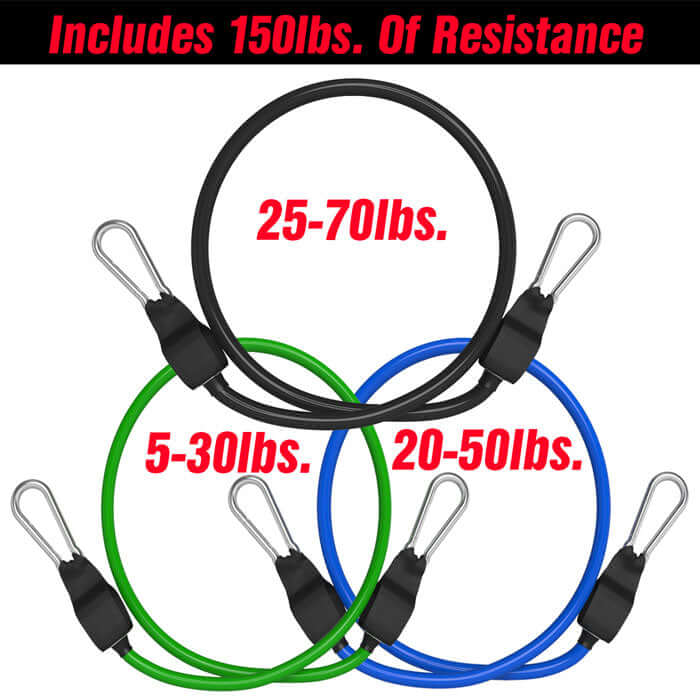
Select a light band for mobility work, a medium band for general strength training, and a heavy band once your control is genuinely solid. Heavy resistance bands should only be added to your routine once lighter tension feels manageable and easy to control.
Avoid wasting reps with the incorrect tension by quickly testing a band before your working set. Step into position, apply light pressure, and confirm the resistance matches what today's session actually calls for.
Set your stance
Stand with feet roughly hip-width apart and toes pointed slightly outward. Position the band above your knees, then step out slightly to create tension before you begin lowering.
Squat and stand
Push your hips back and bend your knees, driving them outward against the band throughout the entire movement. Keep your chest lifted and brace your core throughout the descent and stand back up.
Here’s a quick form checklist that helps most beginners stay consistent from rep to rep:
- Knees track outward, never caving inward toward each other
- Weight stays balanced through your heels and midfoot.
- Chest stays lifted rather than collapsing forward
- Depth stops where control genuinely holds, not before
Muscle soreness is a normal part of any exercise, but intense pain, such as a pinch, is completely different and should never be ignored.
Types of Resistance Band Squats
Different resistance band squat variations serve different training goals depending on your experience and equipment. A few beginner-to-intermediate versions cover almost everything most home training sessions require.
Mini-band squat
This version works best for knee tracking cues, glute engagement, warm-ups, and general bodyweight training. It pairs naturally with portable home workout equipment since the band packs into almost any bag and sets up in seconds.
Long-loop squat
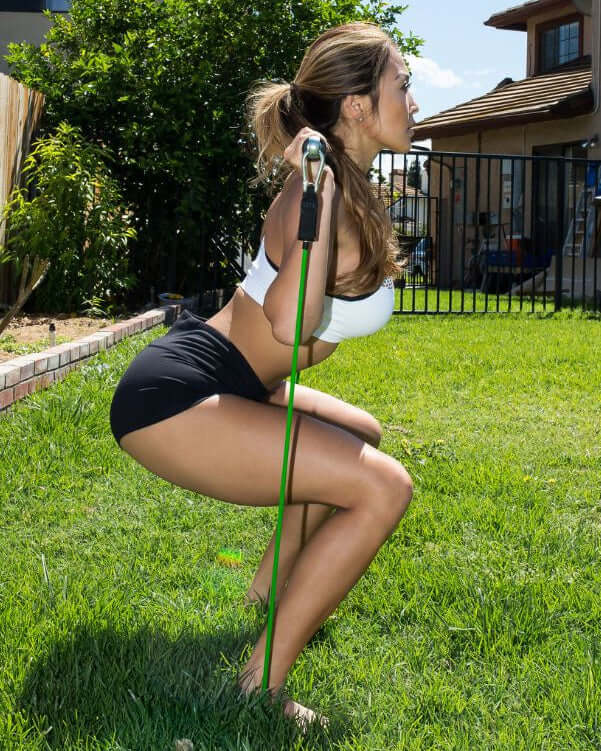
Anchor a long band under your feet and hold it at your shoulders to add real resistance to the movement. This version scales up nicely once mini-band squats start feeling too light.
Long-loop squats also mimic barbell squat mechanics more closely, making them a natural bridge to weighted training later on, all without the cost of a barbell and rack.
Pulse squat
Pulse squats emphasize time under tension through small, controlled movements near the bottom of the rep. This variation works well as an accessory or finisher exercise rather than a primary strength exercise.
Many lifters progress naturally from mini-band squats toward long-loop squats as their control and strength improve over several weeks.
Common Resistance Band Squat Mistakes to Avoid
A handful of mistakes show up constantly with banded squats, even among lifters with decent general form. Each one comes with a straightforward, easy-to-apply fix you can use right away.
Knee cave
Knees collapsing inward reduces control and often signals that the band tension is too heavy right now. Drop to a lighter band and rebuild the outward knee pressure before increasing resistance again.
Poor band placement
Bands that roll, slip, or sit too close to the knee joint create inconsistent tension throughout the set. Reposition the band slightly above the knee crease, where it holds steady through a full range of motion.
Loss of control
Rushed reps, shallow depth, forward leaning, and bouncing out of the bottom all reduce how much the band actually contributes. Slow down, control the descent fully, and let the band do its job on every single rep.
How to Add Resistance Band Squats to Your Workout
Banded squats fit naturally into warm-ups, main lower-body sets, finishers, or travel workouts depending on your goals. Choose the placement that matches what you need most that day.
Sets and reps
Use 2 sets of 10-15 reps for warm-ups and 3-4 sets of 8-12 reps for strength-focused accessory work. Accessory or finisher sets can push for higher reps, often 15 to 20, with lighter tension.
Progression methods
Progress with resistance bands for strength by increasing tension, slowing your tempo, or adding a short pause at the bottom of each rep. Once bands stop feeling challenging, moving toward weighted squats is a reasonable next step.
General resistance training guidelines commonly suggest training each major muscle group 2-3 times per week for steady progress. That frequency works well for banded squats alongside your other lower-body training.
Squat Smarter, Not Just Harder
A well-placed band turns an ordinary squat into a genuinely useful training tool for strength, control, and mobility. Focus on form first, and resistance will only make that foundation stronger over time.
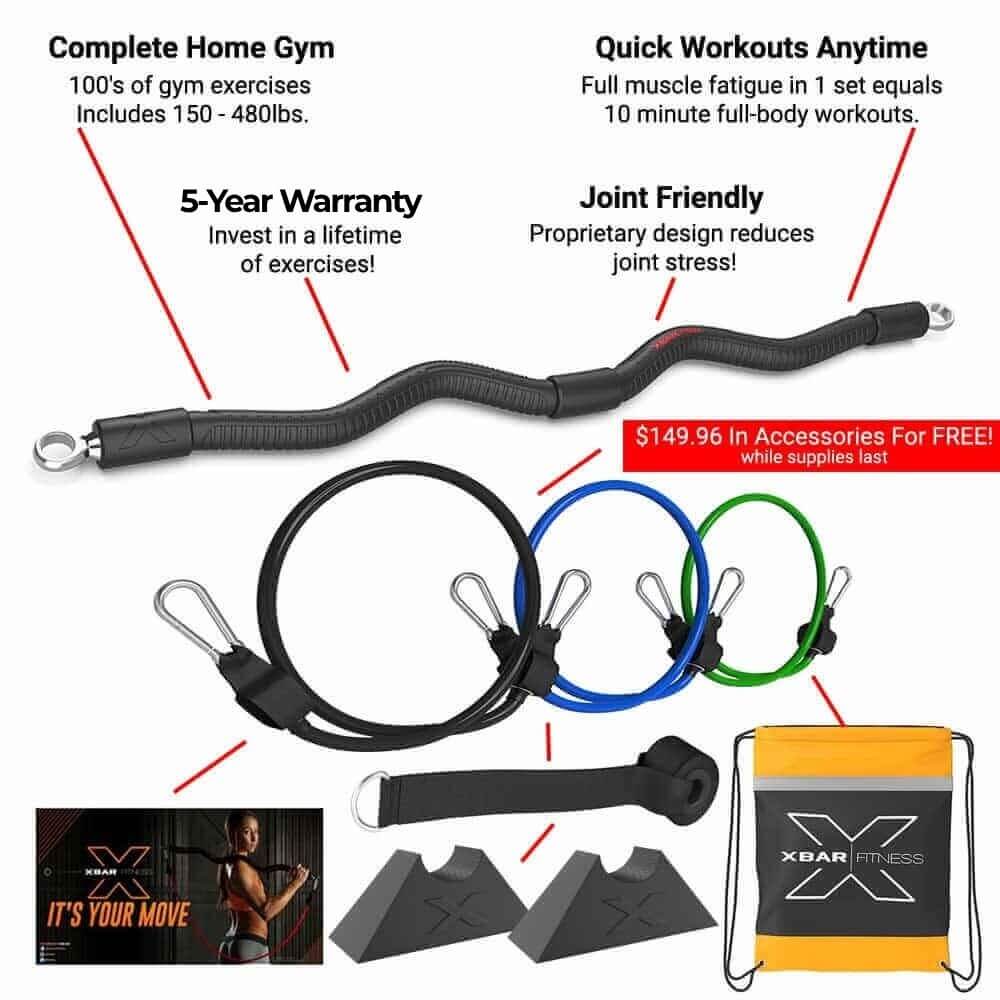
Pair the right band with reliable gym equipment for home gym setups, and Xbar gives you a squat pattern you can keep using for years at a fraction of a gym membership's cost.
FAQs About Resistance Band Squats
Yes, resistance band squats can support muscle growth when tension stays challenging, and effort approaches genuine fatigue. Progressive overload still matters more than the specific tool used to create it.
Place the band just above the knees for the most common and beginner-friendly banded squat setup. Other placements, including the thighs or feet, work well for specific variations and goals.
Bands work well as a standalone tool for beginners, warm-ups, and accessory training. Once you feel genuinely solid with banded control, you should pursue heavier strength goals with weighted squats.
Most lifters get solid results training banded squats 2 to 3 times per week. Adjust frequency based on recovery, total lower-body volume, and how quickly soreness fades between sessions.
Knee cave usually signals that the band tension exceeds your current hip control on that specific day. Drop to a lighter band, rebuild outward knee pressure, and progress tension gradually from there.