



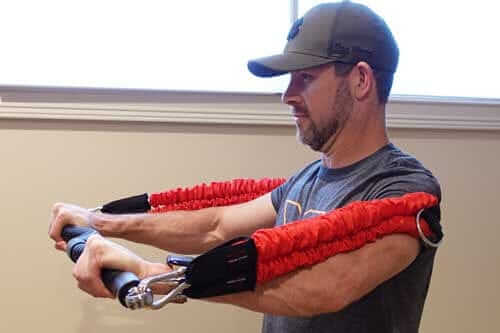
How to Do a Resistance Band Chest Press for Maximum Muscle Activation
A chest day used to mean waiting for a free bench, loading plates, or paying for a gym membership just to press something heavy. None of that is a mandate anymore.
A resistance band and a stable anchor point deliver the same pressing tension in a fraction of the space and cost, whether you train in a spare bedroom, a hotel room, or between meetings at the office. The whole setup takes under a minute: no waiting, no crowd, no excuse.
This guide walks through setup, proper form, activation cues, common mistakes, useful variations, and simple programming. By the end, you will know exactly how to make every rep count toward a stronger chest, no matter where you happen to be training that day.
What Is the Resistance Band Chest Press?
The resistance band chest press mimics a traditional barbell or dumbbell press using elastic resistance instead of fixed weight plates. You anchor the band behind you, then press the handles forward until your arms are fully extended.
This movement primarily targets the chest, with the front delts and triceps assisting throughout the press. On each repetition, particularly when the arm is at full extension, the smaller stabilizer muscles surrounding the shoulder blade contract to maintain joint control.
Resistance bands provide variable resistance, which means tension increases steadily as the band stretches. That rising curve matches your natural strength pattern more closely than a fixed weight ever could, and it feels noticeably easier on the joints.
Unlike a standard push-up, the band press lets you adjust resistance independently of your body weight. That difference makes it a useful option for beginners who cannot yet manage full push-up volume, as well as advanced individuals already pros at chasing heavier loads.
Benefits of the Resistance Band Chest Press
Band presses are a great alternative to barbell work when you're not at the gym because they are easy to transport. The variable tension also reduces strain on the shoulder joint compared with heavy free weights.
Over time, you can achieve real strength and hypertrophy gains by training with resistance bands to failure. That means consistent band pressing builds muscle just as effectively as many traditional pressing methods, provided intensity stays high enough.
The portability factor matters more than most lifters realize when travel or limited space comes into play. A set of strength-training resistance bands replaces an entire pressing station, keeping your chest training consistent even during busy weeks.
You can achieve that level of consistency without shelling out a ton of money for a gym membership or a complete home gym setup.
What Equipment Do You Need for a Resistance Band Chest Press?
A single band and a fixed anchor point support the entire movement. Most lifters use a door anchor, though any sturdy post or rack upright works just as well.
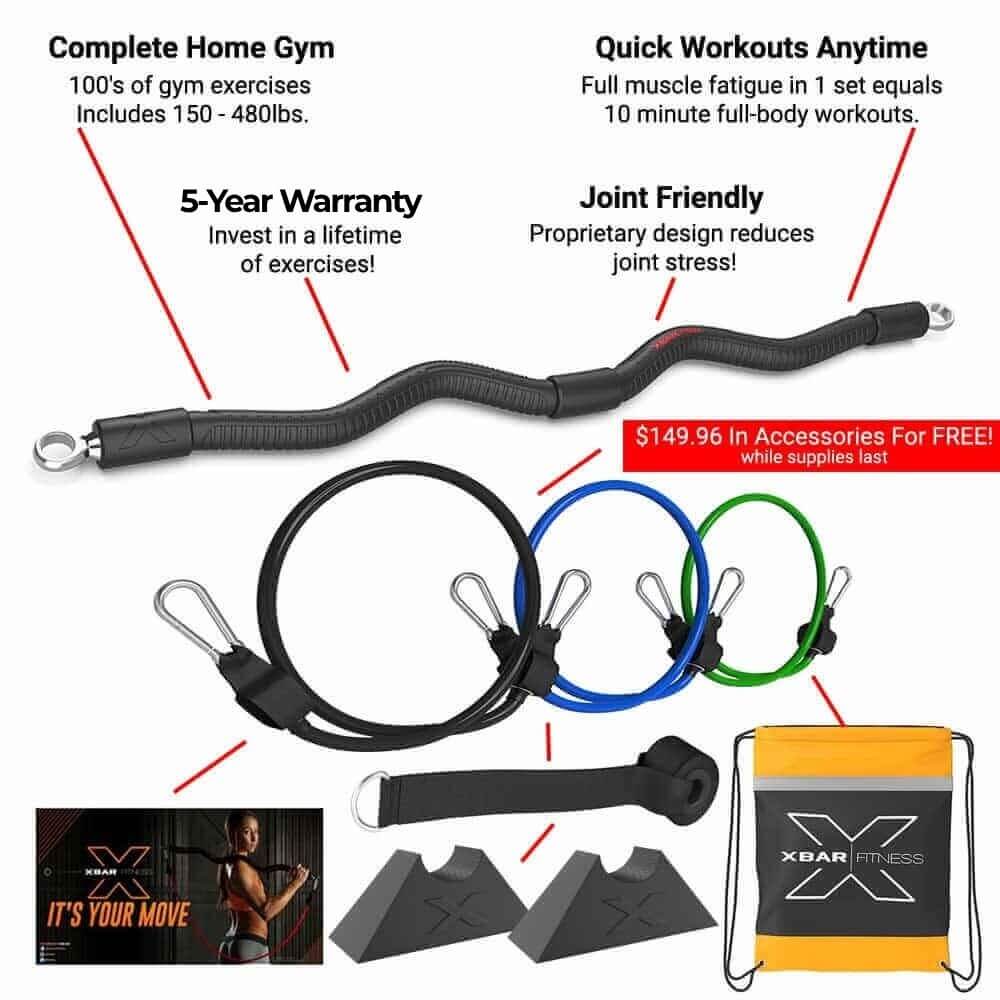
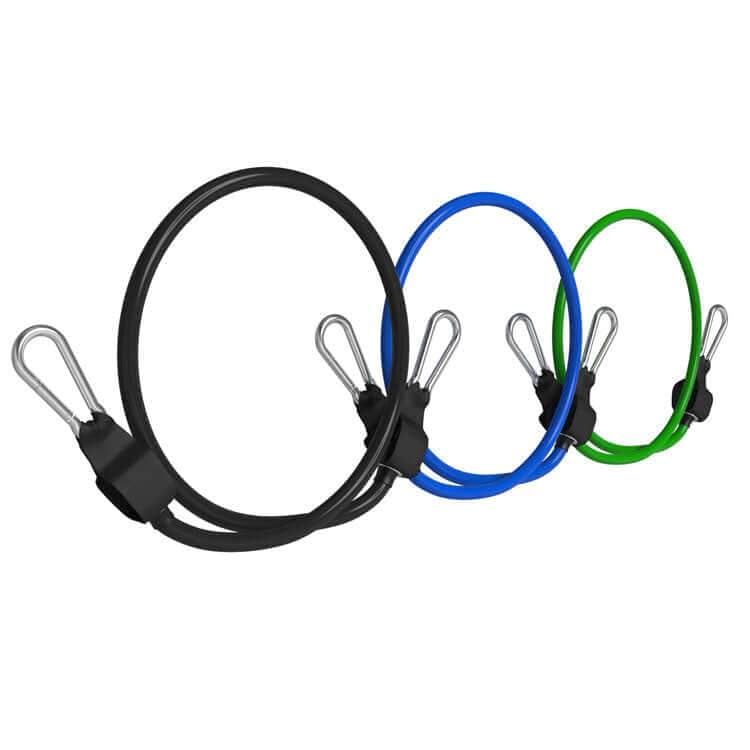
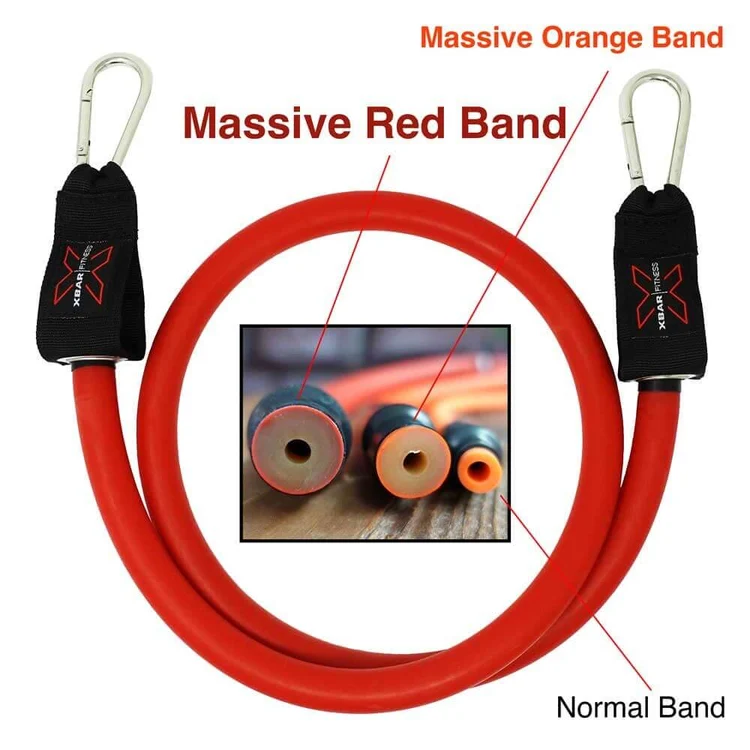
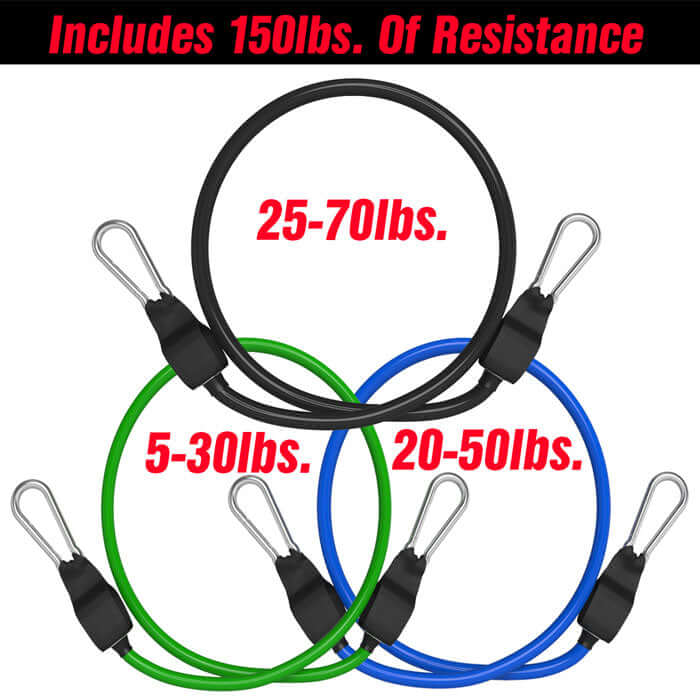
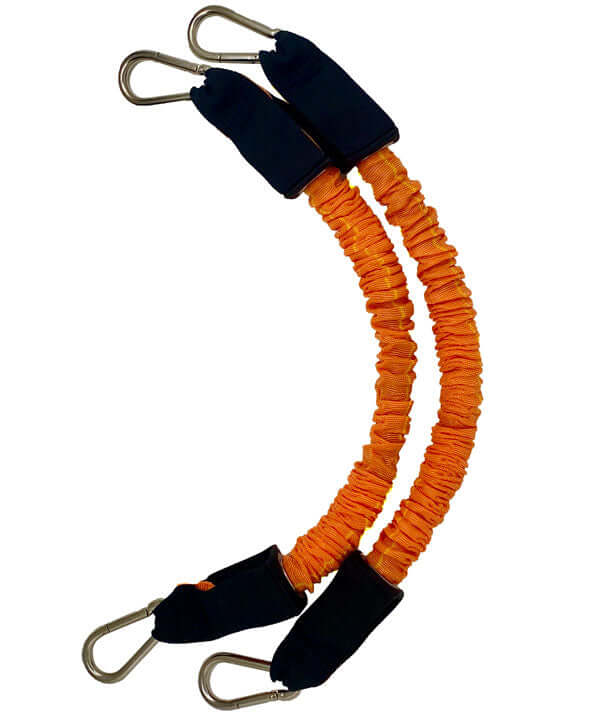
Comfortable handles make gripping easier during higher-rep sets, especially once your hands start to fatigue. A set of resistance band attachments rounds out a complete pressing setup for almost any space.
Compared to the retail price of a standard bench and rack, that setup is incredibly inexpensive.
A door anchor works well for most home setups, while a rack post or sturdy railing serves the same purpose during travel. Either way, check that the anchor is secure before starting a full working set.
How to Do a Resistance Band Chest Press
Follow these five steps in order, and keep every movement controlled rather than rushed. Setup takes well under a minute once you know the routine.
- Create Band Tension: Anchor the band behind you at chest height and step forward until you feel resistance.
- Set Your Starting Position: Hold a handle in each hand with elbows bent and hands near your chest.
- Press the Handles Forward: Extend your arms fully while keeping your shoulder blades stable against your ribcage.
- Squeeze Your Chest: Pause briefly at full extension and squeeze your chest muscles hard.
- Return Under Control: Bring the handles back slowly, resisting the band the entire way.
Secret sauce no one tells you: keep your shoulder blades pinned down and back throughout the press, rather than letting them roll forward as your arms extend.
How to Increase Chest Activation
A few small technique adjustments help the chest do more of the actual work. Band tension, body angle, and range of motion all play a direct role in that shift, and each one is easy to fix once you know what to look for.
Band Tension
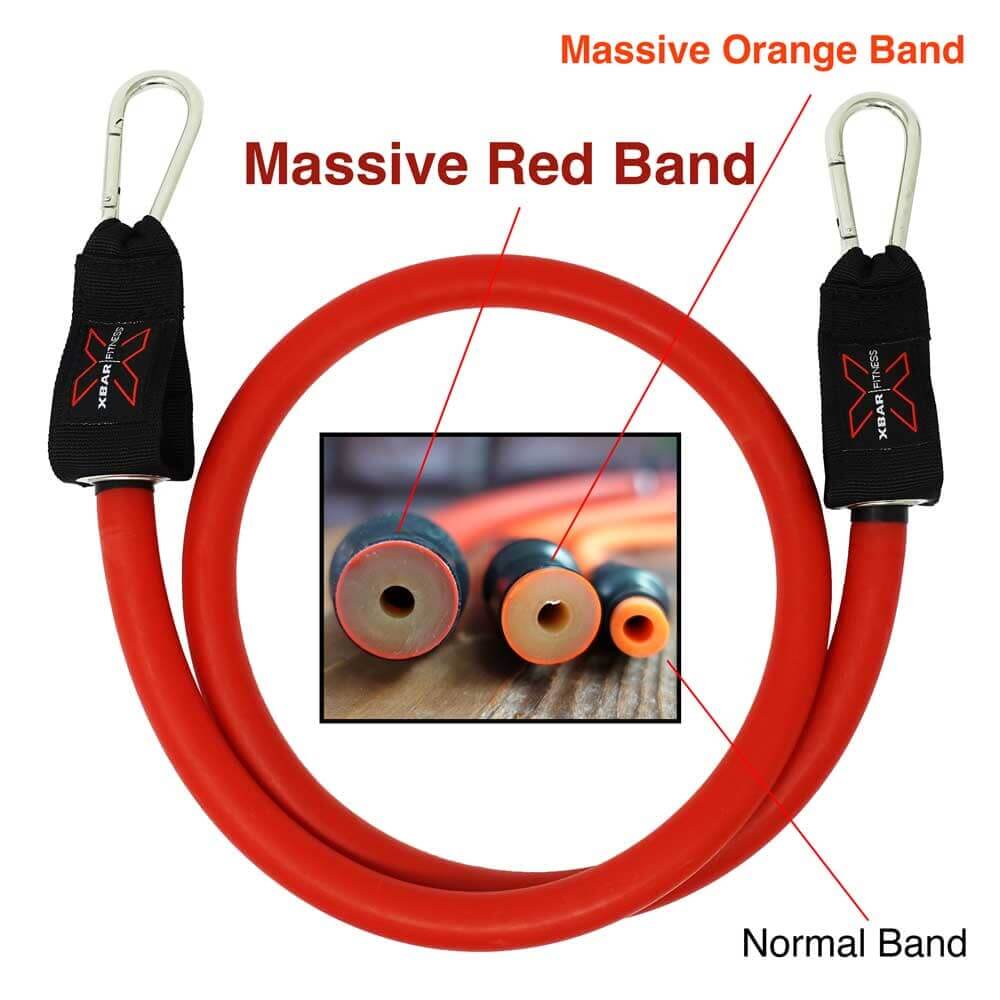
Stepping farther from the anchor increases resistance without changing bands at all. An exercise resistance band set also gives you room to size up tension in smaller jumps.
That fine control lets you keep progressing without your form breaking down at the end of each set.
Range of Motion
Bring your hands back close to chest level on every rep rather than stopping short. Squeeze the chest firmly at full extension without shrugging your shoulders up toward your ears.
Common Mistakes to Avoid
A pair of form issues consistently shows up during band chest presses, even among experienced lifters. Both quietly shift stress away from the chest and toward the shoulders.
Shoulder Position
Flared elbows, shrugged shoulders, and letting the band yank your shoulders backward all reduce chest engagement. Keep your elbows slightly tucked and your shoulders pulled down throughout the entire set.
Uncontrolled Reps
Bouncing through reps reduces tension and strips away the control that builds real strength. Slow the return phase deliberately, and treat every rep like it matters just as much as the first.
Shoulder discomfort during pressing often relates to poor elbow position, excessive band tension, or a rushed, uncontrolled tempo. Addressing those factors resolves the most pressing discomfort without needing to stop training altogether.
Resistance Band Chest Press Variations and Programming
You can cover the majority of training scenarios with just a couple of practical variations. Choose the version that matches your current strength level and available space.
Adjusting anchor height also shifts where the press emphasizes the chest. A slightly lower anchor biases the upper chest, while a higher anchor shifts more work toward the lower fibers.
Standing Chest Press
This version works as the standard option for most lifters at any experience level. Aim for 2 to 4 sets of 8 to 15 reps, depending on your current strength and band tension.
Most home training sessions can rely almost entirely on this single variation for months. Rotating band tension and tempo keep the movement challenging without needing an entirely new exercise or a bigger equipment budget.
Single-Arm Chest Press
Single-arm pressing challenges core stability while addressing side-to-side strength differences between arms. Use lighter resistance and slower reps here, since balance demands increase considerably compared with pressing both arms together.
This variation also translates well to real-world pushing patterns, where both arms rarely exert identical force simultaneously.
The Centers for Disease Control and Prevention recommends that adults performmuscle-strengthening activities on at least 2 days each week, which fits comfortably around 2 to 3 weekly chest sessions using bands.
Safety Tips for Resistance Band Chest Presses
Inspect your band for nicks or thinning before every session, since a worn band can snap unexpectedly under load. Anchor points should feel completely solid before you commit real tension to a rep.
Rebecca Ditwiler, DPT, is an associate professor at the University of South Florida School of Physical Therapy. She has explained that band resistance increases steadily as the band stretches.
That gradual increase lets lifters build pressing strength progressively rather than jumping between fixed dumbbell or barbell weights. If you feel sharp or lingering shoulder pain rather than normal muscle fatigue, stop the exercise and consult a doctor or physical therapist before continuing.
Get Better Results From Your Resistance Band Chest Press
Consistent form and progressive tension drive most of the real progress behind this exercise, not fancy equipment or expensive gym memberships. A controlled tempo and steady weekly sessions do the rest.
Portable home gym workout equipment is all Xbar recommends for pressing hard, whether you train at home, at a hotel, or in a garage.
Frequently Asked Question
Yes, resistance bands can build real chest muscle when tension stays challenging and sets approach fatigue. Consistent progressive overload matters more than the specific tool used to create it, whether that tool is a band, a barbell, or a machine.
Anchor the band at chest height behind you for the standard chest press with a resistance band. That height keeps the pressing angle consistent with a traditional flat press.
Neither option is universally better, since both train similar muscles through different resistance curves. Bands offer adjustable tension, while push-ups rely entirely on your body weight for resistance.
Most lifters see solid results training chest presses 2 to 3 times per week. Adjust frequency based on recovery, total weekly chest volume, and how quickly soreness fades.