



Mobility Made Simple: Resistance Bands Help You Move Better
Because real strength isn’t just what you can lift, it’s how easily you move through life.
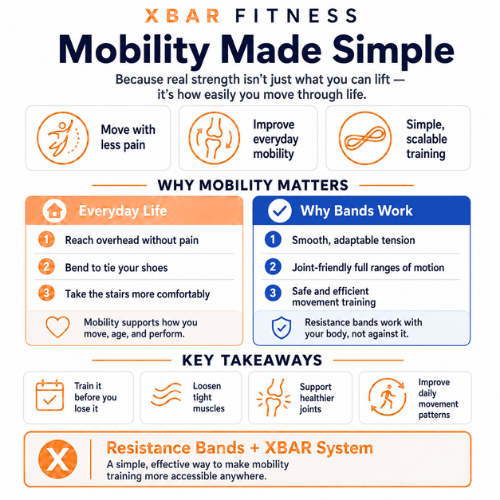
Mobility isn’t a fitness trend,it’s the foundation of how we move, age, and perform in everyday life. It’s what lets you reach overhead without pain, bend to tie your shoes, or take the stairs without feeling like your joints just filed a complaint.
Yet most people don’t train it until it’s already gone. Resistance bands, especially when paired with the XBAR system, make mobility training simple, scalable, and incredibly effective.
Unlike rigid machines or heavy barbells, resistance bands work with your body, not against it. They create smooth, adaptable tension that helps your muscles and joints move through full ranges safely and efficiently. Think of them as your built-in mechanic—tuning up tight muscles, re-greasing stiff joints, and improving movement patterns you rely on every single day.
Why Mobility Matters in Everyday Life
Mobility isn’t about touching your toes or doing the splits; it’s about moving without friction. When your body loses mobility, simple actions like twisting, reaching, or squatting start to feel labored.
This leads to compensation patterns, fatigue, and, eventually, pain. Maintaining mobility means maintaining independence: whether that’s chasing your kids, carrying groceries, or getting in and out of the car comfortably.
Modern life works against movement. We sit too much, stare at screens, and rarely move through the full range our bodies were designed for. Over time, this shortens muscles, stiffens connective tissue, and weakens stabilizing muscles.
That’s where resistance bands step in. They don’t just stretch muscles, they teach your body to control strength through range retraining the nervous system to move efficiently again.
How Resistance Bands Enhance Mobility
Most people think mobility work means passive stretching. Stretch, hold, yawn, repeat. The problem? That approach only lengthens tissue temporarily—it doesn’t teach it to stay strong through motion. Resistance bands fix that by adding active tension. When you move against resistance, you engage stabilizing muscles and connective tissues that keep joints supported. It’s the difference between flexibility and usable, athletic mobility.
Here’s why bands are so effective:
- Dynamic Tension: Bands increase resistance as they stretch, forcing muscles to work harder at the end range where stability matters most.
- Joint-Friendly Load: Bands never “crash” your joints like weights do; tension rises gradually and safely.
- Full-Body Integration: Every movement activates your core and stabilizers, turning mobility drills into total-body strength work.
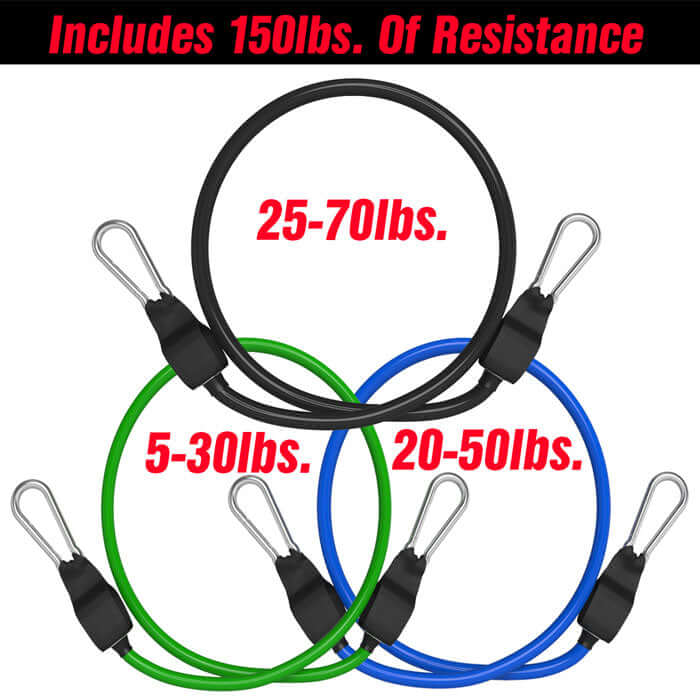
- Adaptability: Light, medium, or heavy—simply change bands to scale from recovery to athletic-level mobility.
- Consistency Anywhere: You can train mobility in your living room, hotel, or office. The only equipment you need fits in a backpack.
In short, resistance bands help your body rediscover how it’s supposed to move—strong, controlled, and pain-free.
Real-World Mobility: Everyday Scenarios Bands Can Transform
A) Waking Up Stiff? Try a Morning Flow
Use a light band to open your shoulders, hips, and ankles first thing in the morning. Ten minutes of movement primes your nervous system better than any cup of coffee. Gentle band pull-aparts, hip openers, and ankle circles stimulate blood flow and make your first steps of the day smooth instead of creaky.
B) Sitting All Day? Undo It with Band Work
Desk life compresses your hips and rounds your shoulders. Bands can reverse that damage in minutes. Anchor a band behind you and perform banded pull-aparts to wake up your upper back. Loop another band around your thighs and do banded glute bridges—your antidote to “office chair hips.”
C) Weekend Warrior? Prep Your Joints Before You Go
Before running, cycling, or hitting a workout, use resistance bands to mobilize key joints dynamically. Shoulder dislocates, side steps, and thoracic rotations with a band activate stabilizers so you move with precision, not stiffness. It’s like upgrading your joints from 3G to fiber optic speed.
D) Traveling or Recovering? Maintain Without Losing Gains
Mobility work doesn’t need a full gym. A single band and five feet of floor space can maintain your range of motion while you travel or recover. Try standing hamstring activations, ankle dorsiflexion drills, or band-assisted squats to keep your joints fluid wherever you are.
The Science Behind Tension and Control
Mobility isn’t just about stretching tissue—it’s a conversation between your muscles and your nervous system. Your brain limits motion it doesn’t trust. By applying steady, progressive resistance, bands teach your nervous system that movement is safe, allowing it to release tension and expand range.
Studies from the American Council on Exercise (ACE) and NASM show that active resistance improves both flexibility and strength more effectively than static stretching alone. Bands stimulate mechanoreceptors—sensory nerves in muscles and tendons—that regulate tone and joint position. This neural feedback builds coordination and control while reducing the risk of strains.
In simpler terms: your body stops guarding and starts moving. Over time, consistent resistance-based mobility training leads to improved posture, reduced pain, and more efficient movement in everything from workouts to walking the dog.
Mobility as a Lifestyle Habit
You don’t need an hour-long session or a fancy studio to maintain mobility. You just need consistency. The goal isn’t to move perfectly—it’s to move often. Ten minutes of band work daily adds up fast: better posture, deeper breathing, and smoother motion throughout your day.
Here’s how to weave it into your routine:
- Morning Reset: Two or three band drills to wake up your joints before coffee.
- Desk Breaks: Every 90 minutes, do 60 seconds of band pull-aparts or hip extensions to reset posture.
- Pre-Workout Activation: Use bands to “turn on” glutes, shoulders, and core before training.
- Evening Recovery: Finish your day with light band-assisted stretches to unwind tight muscles.
When mobility becomes a habit, everything gets easier for training, recovery, even sleep. And because XBAR bands are lightweight and portable, it’s effortless to stay consistent at home, in the office, or while traveling.
Build a Complete Home Gym Experience
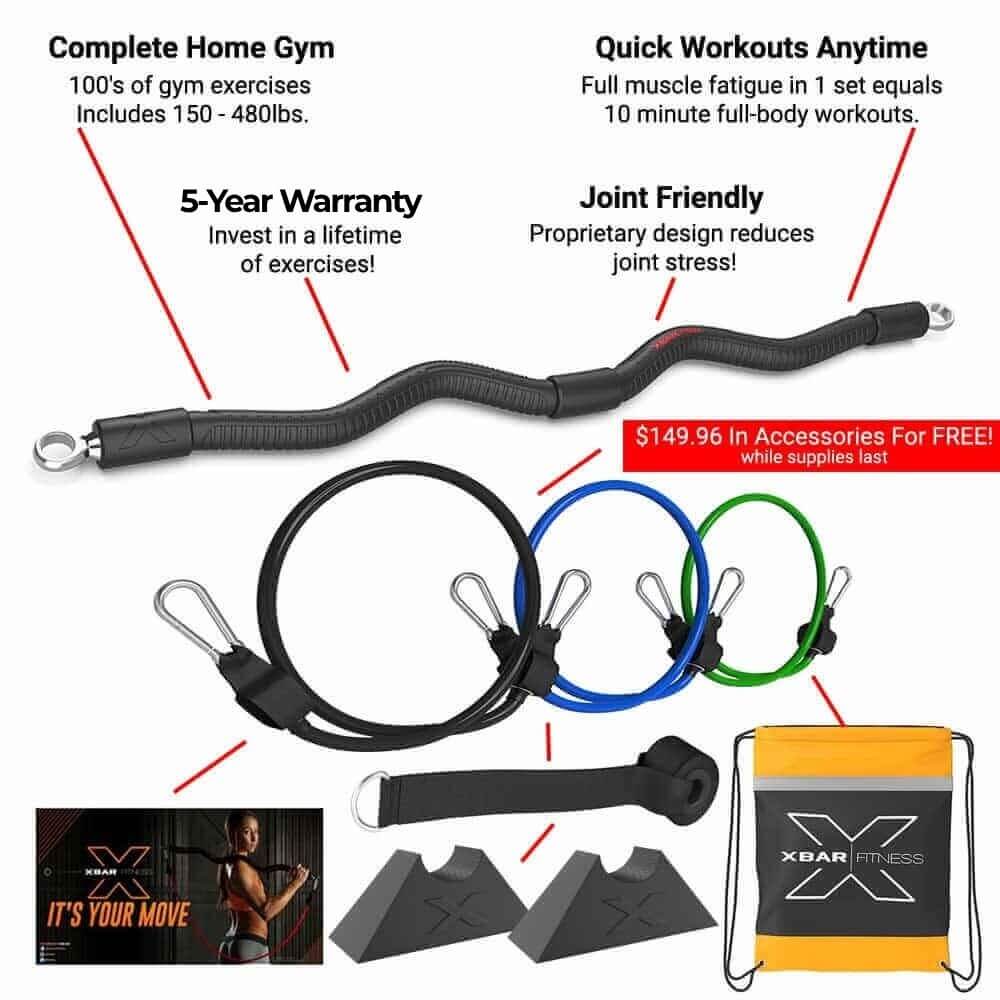
Mobility training shouldn’t feel like a chore. With XBAR, it feels like freedom. The bar, bands, and anchors work together to create controlled resistance through every angle, giving you a full range of motion that standard gyms can’t match. You’re not limited to static stretches or bodyweight drills, you’re creating active, joint-friendly movement that translates to real-world performance.
Pair light and medium bands for your daily mobility flow, then step up to heavier resistance for strength days. Use straps and anchors to change angles and loading patterns. Every piece is portable, modular, and designed to work seamlessly togetherso your “home gym” can fit in a single bag. This isn’t just about stretching; it’s about upgrading the way you move through life.
Mobility is the New Financial Currency
Mobility is the unsung hero of every fitness journey. It’s what keeps you moving freely, feeling younger, and performing better, no matter your age or goals.
The XBAR System turns mobility training into something simple, accessible, and actually enjoyable. Whether you’re starting your day, finishing a workout, or recovering from one, a few minutes with your bands can change how your body feels for the rest of the day.
It’s time to stop stretching for show and start training for life.
FAQs
How often should I train mobility with resistance bands?
Daily light sessions work best. Think 5–10 minutes in the morning or after sitting for long periods. Consistency matters more than duration.
Can resistance bands replace stretching?
Yes—and they’re better. Bands build active flexibility, teaching muscles to lengthen under control rather than just going limp during passive stretches.
Are mobility workouts enough for strength?
Mobility training improves movement quality, which boosts your strength and performance across all exercises. Combine it with resistance training for optimal results.
Which resistance band should I use for mobility?
Start with light or extra-light bands. These provide enough tension for activation without overloading joints.
Can I do this if I have previous injuries?
Yes, but move slowly and focus on control. If you’re rehabbing, consult a licensed professional and use your bands for gentle, guided motion.