



The Best Resistance Bands, Tested & Ranked
Most resistance bands sold online do not hold up past a few weeks of real use. One thing quickly became clear after dozens of bands were stretched, snapped, and stacked during strength, mobility, and travel exercises: heavier ratings do not always mean better performance, and thin latex tears sooner than most labels admit.
To resolve this issue, we have compiled a guide that ranks the bands that actually held up, from light rehab-friendly loops to gym-grade sets built for heavy compound lifts. Every pick below reflects real testing, not a spec sheet copied from a manufacturer's page.
What Are Resistance Bands?
Resistance bands are elastic strength-training tools that create tension as you stretch them. That simple mechanism makes it one of the most versatile pieces of home workout equipment you can own, useful for everything from a quick warm-up to a full strength session.
Bands work for strength building, warm-ups, mobility drills, and full recovery sessions alike. A single set packs into a bag small enough for a carry-on, then sets up in under a minute for a complete workout.
Because tension increases gradually rather than jumping between fixed plates, bands feel noticeably easier on the joints during pressing and pulling movements. That matters whether you are 25 years old and training hard or 55 and training smart.
Research from the National Institutes of Health found that elastic resistance training produced roughly a 24% gain in bench press strength. That benefit comes from following a structured, multi-week program that is comparable to many free-weight routines, according to NIH research on elastic resistance training.
Best Resistance Bands
Testing reduced the field to five excellent choices for both travel workouts and strength warm-ups. Each one earned its spot for a specific type of training, so the right pick depends on your current goals and experience level.
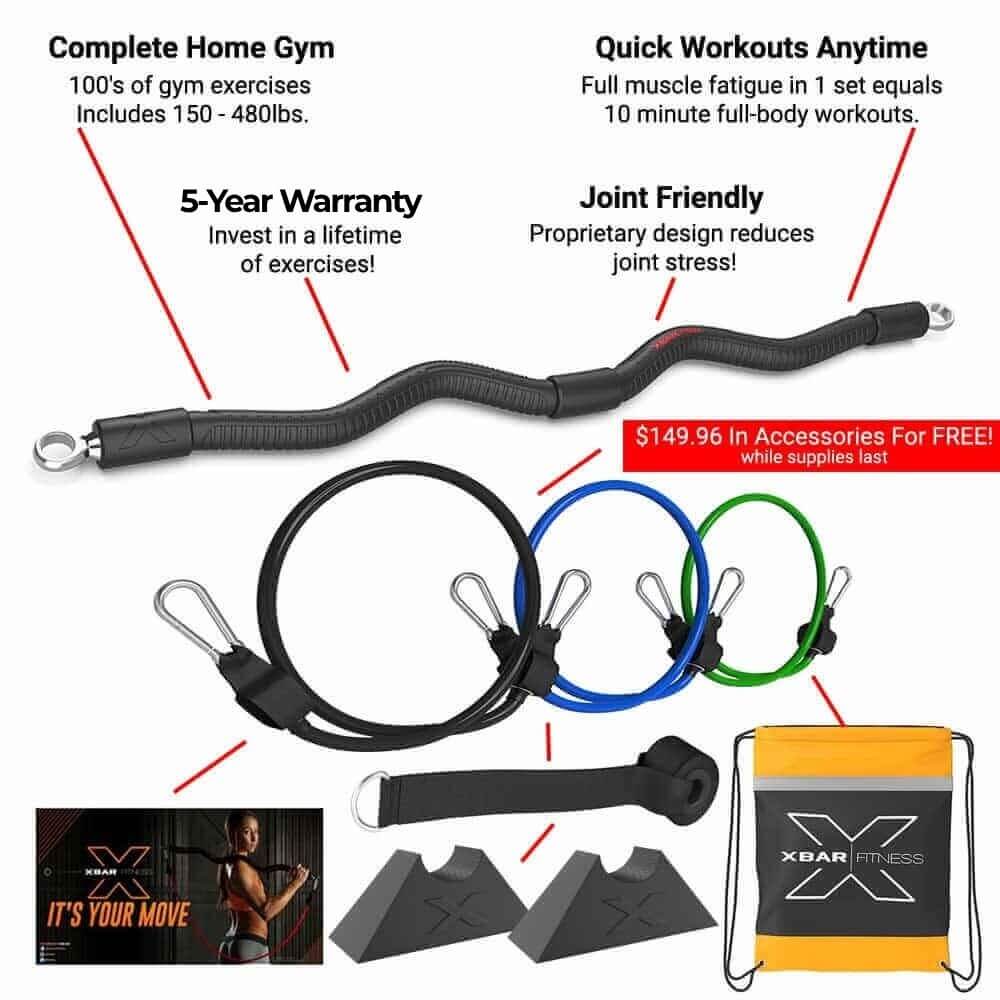
XBAR Resistance Band Set 2.0: Best Overall

Best for: Lifters who want a single set that scales from light rehab work to heavy strength training.
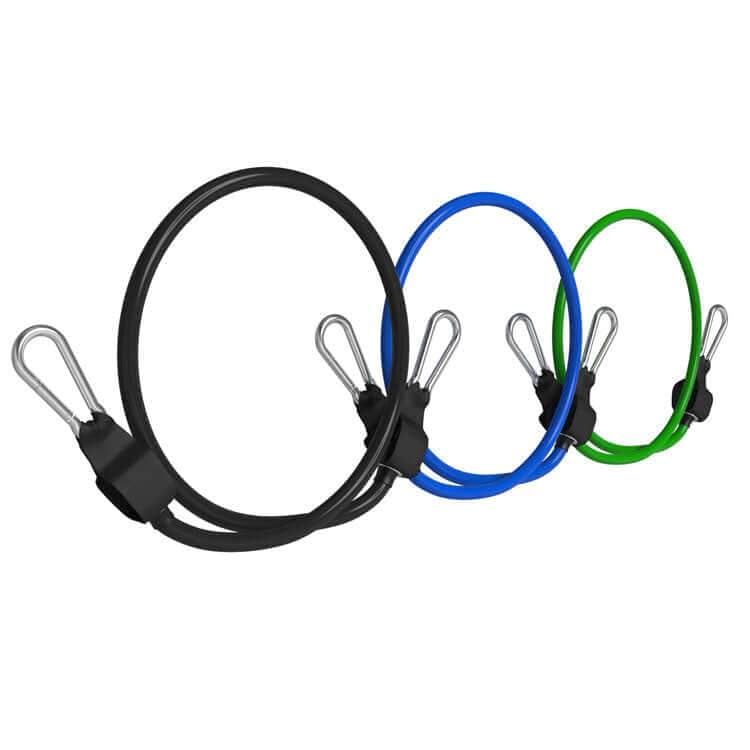
This resistance band set ranked at the top of every category we tested for smoothness and tension consistency. The nylon sleeve prevents the pinching and snapping that plague bare latex bands under load.
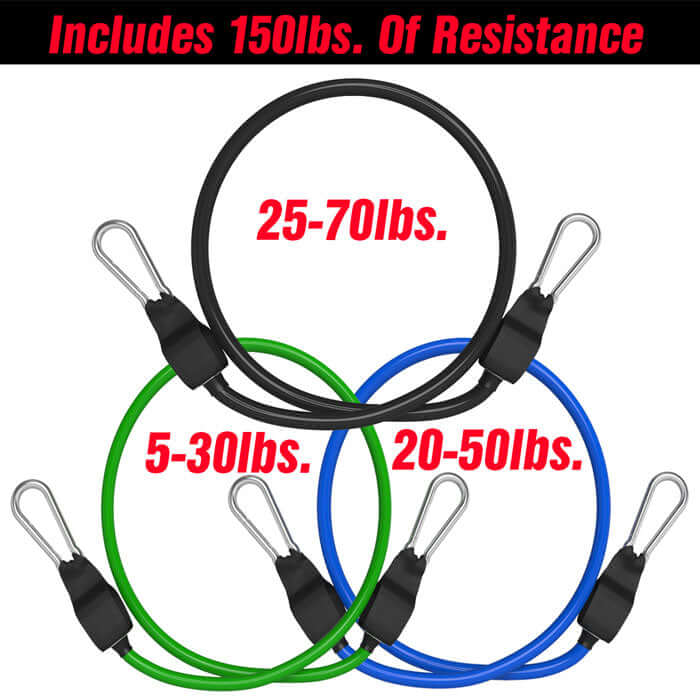
With a range spanning 5 pounds to over 150 pounds, a single set replaces an entire rack of dumbbells and costs far less than most home gym setups.
XBAR Kit with Resistance System 2.0 Bands: Best Full Home-Gym Bundle

Best for: beginners who want a complete setup without piecing gear together themselves.
This bundle pairs the rotating bar with a matched set of bands, anchors, and straps. Because everything is sized to work together, new lifters skip the guesswork of mismatched gear entirely.
It scored highest among testers who had never trained with bands before. The setup took under a minute in every trial.
XBAR Heavy Resistance Bands: Best for Serious Lifters

Best for: experienced lifters chasing heavy compound movements like squats and deadlifts.
Rated between 25 and 70 pounds, these bands held tension through the toughest sets we ran, including banded deadlifts and squat-to-press combinations. Testers reported minimal snap-back compared to competing heavy bands in the same price range.
XBAR Light Resistance Bands: Best for Warm-ups and Rehab

Best for beginners, warm-up routines, and low-impact rehabilitation.
These bands were perfect for shoulder activation exercises because they provided the softest ramp of tension among the lineup. Physical therapy patients and older adults consistently rated this band as the easiest to control without discomfort.
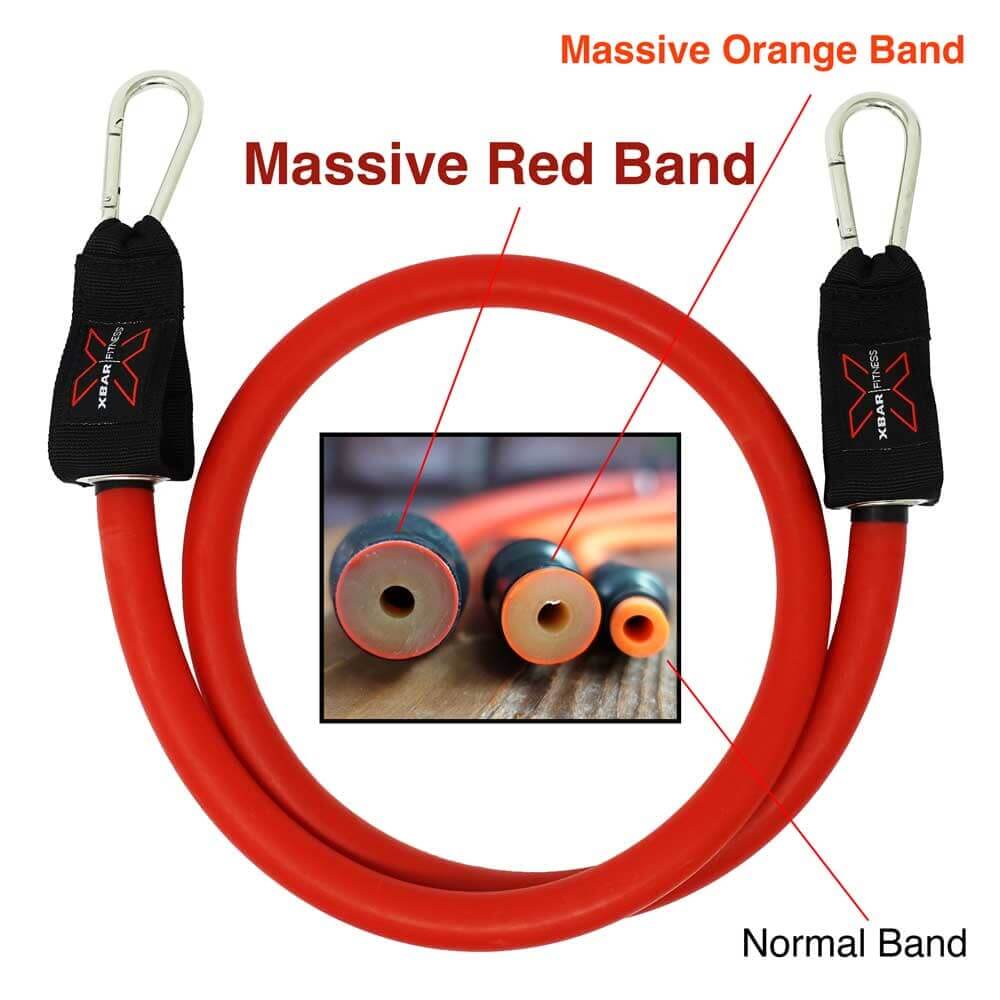
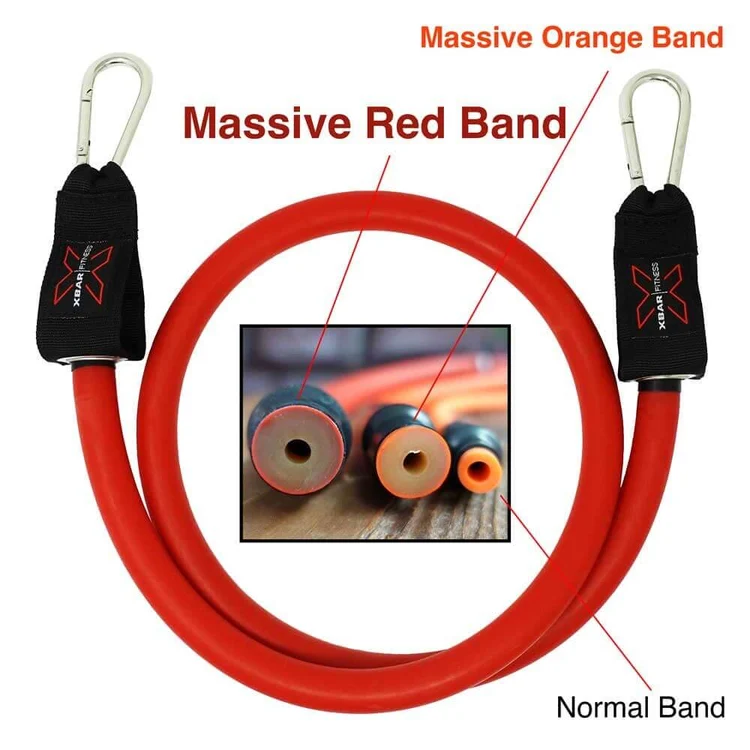
XBAR Massive Orange Bands: Best for Maxing Out Resistance

Best for: advanced athletes who have already outgrown standard heavy bands.
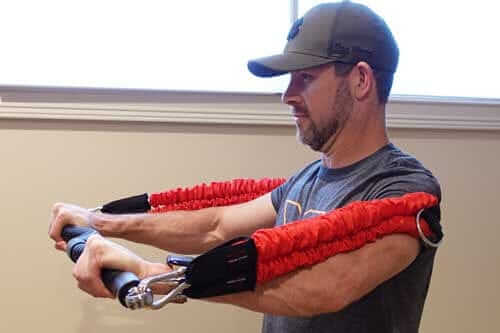
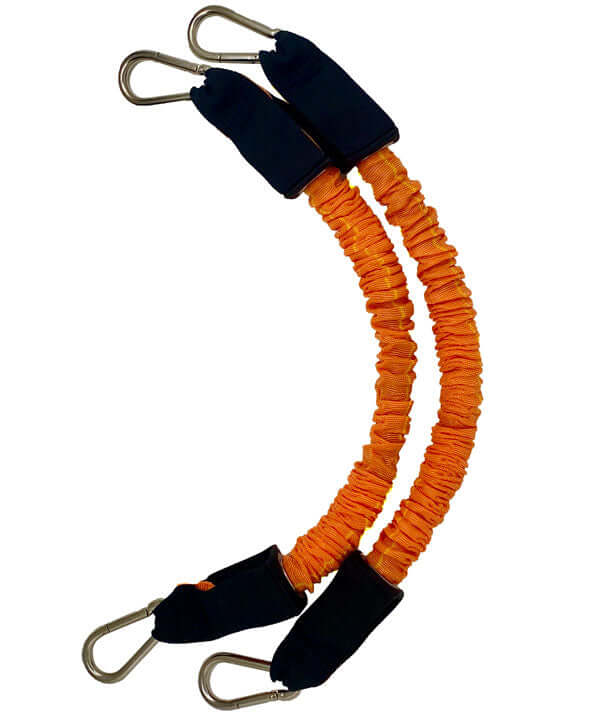
Each sleeved band in this add-on set adds over 110 pounds of resistance when stacked with an existing set. Testers used them mainly for banded squats and heavy anchor presses that required loads beyond a standard kit.
Features to Look for When Choosing Resistance Bands
Picking the right band means looking past price toward safety, resistance range, and overall workout versatility. The features listed below directly support practical training objectives like mobility, muscle growth, and travel-friendly setups.
Resistance Levels
Match band tension to your training goal rather than to the highest number on the label. Light bands suit warm-ups and rehab, medium bands suit general strength work, and heavy bands suit lifters chasing compound movements.
|
Band Type |
Typical Range |
Best Use |
|
Light |
5-30 lbs |
Warmups, rehab, mobility |
|
Medium |
20-70 lbs |
General strength training |
|
Heavy |
25-110 lbs |
Compound lifts, advanced training |
|
Stackable add-ons |
110+ lbs |
Maxing out total resistance |
Stackable bands solve a real problem for travelers and small apartments. Instead of hauling 5 pairs of dumbbells, a traveler tested a single set of gym resistance bands that covered an entire strength routine and fit in a carry-on bag.
Durability and Safety
Before you do anything else, check snap resistance because a failing band under tension can actually cause you harm. Reinforced connection points, sleeved designs, and seamless molding all extended the working life of every band we tested.
Inspect bands regularly for small nicks, cracks, or thinning spots. Retire any band showing visible wear rather than risking a snap mid-set.
Accessories and Anchors
The right resistance band accessories turn a simple band into a genuinely complete home-gym system. Door anchors unlock incline and decline pressing angles, while ankle straps expand leg-day options considerably.
Comfortable resistance band handles reduce wrist strain during curls, rows, and presses. That comfort matters most during higher-rep sets, when grip fatigue tends to set in first.
How We Tested and Ranked the Resistance Bands
Every band in this guide underwent the same testing protocol for weeks. We measured tension consistency at multiple stretch points and tracked visible wear after repeated sessions.
Testers ranged across various levels, from beginners to advanced lifters, allowing us to assess comfort and safety across different strength levels and body types. Durability and tension accuracy were given the highest weight in the final rankings because, once a band is in use, these two factors are more important than price.
How to Choose the Best Resistance Bands for Your Goals
Match your band choice to your intended use rather than to whatever set happens to be on sale. Choosing bands that allow you to scale resistance over time keeps your training progressing rather than stalling out.
Think about where you train most often, whether that is a home gym, a small apartment, or a hotel room on the road. That single detail often narrows the decision faster than comparing specs alone.
Strength Training
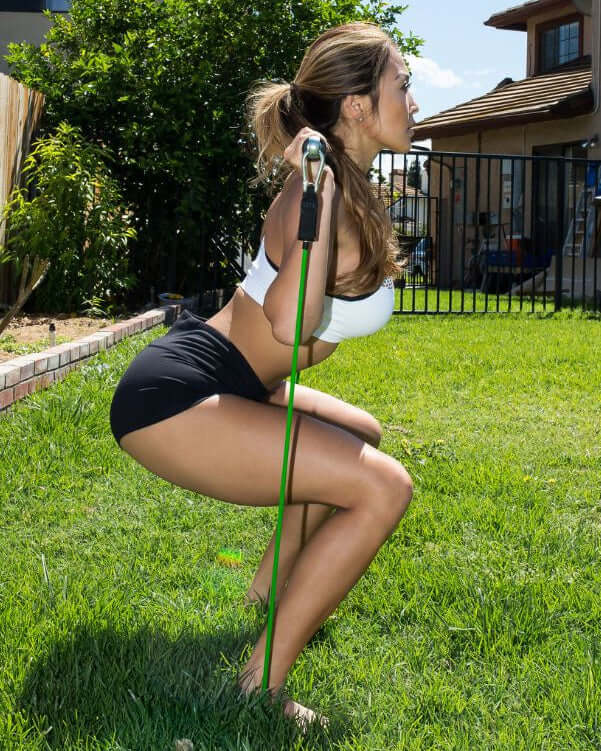
Choose heavier bands, stackable tension options, and a stable bar or handle attachment for serious strength work.
Rebecca Ditwiler, DPT, is an associate professor at the University of South Florida School of Physical Therapy. She has explained that band resistance increases steadily as the band stretches.
That gradual buildup lets lifters progress tension in small steps rather than jumping between fixed dumbbell weights.
Mobility and Recovery
Choose lighter loop or therapy-style bands for stretching, activation drills, and controlled range-of-motion work. These lighter options let beginners and rehab patients build confidence before progressing to heavier resistance levels.
Slower, controlled reps matter more than raw tension during this type of training. Focus on smooth, pain-free movement through the full range before adding any extra resistance.
Small Band, Real Results
A good resistance band earns its place through consistent tension, honest durability, and a range that scales with you for years, not months.
Skip the flashy packaging and pick gear built to work with your body, not against it.Xbar builds every band in this guide around that exact standard, without the price tag of a traditional home gym setup.
FAQ About the Best Resistance Bands
Light-to-medium loop bands work best for beginners starting a new strength routine. They offer a gentler tension curve, which helps new lifters focus on form before adding heavier resistance.
Yes, resistance bands can build real muscle when used with proper progression and effort. Consistent training with increasing tension elicits the same strength adaptations as traditional free weights.
Neither option is strictly better, since each serves different training needs and spaces. Bands offer more portability and joint-friendly tension, while dumbbells offer simpler, fixed-load progression for some lifters.
Most quality bands last through several months of regular use before showing real wear. Lifespan depends heavily on storage, sun exposure, and how often the band gets stretched near its limit.
Most beginners should start with a light or medium band and build up gradually. Choose a tension that makes the last few reps of a set feel challenging while keeping your form steady.