



Resistance Band Chest Exercises: Build a Powerful Chest at Home
The Best Resistance Band Chest Exercises: Build a Powerful Chest at Home
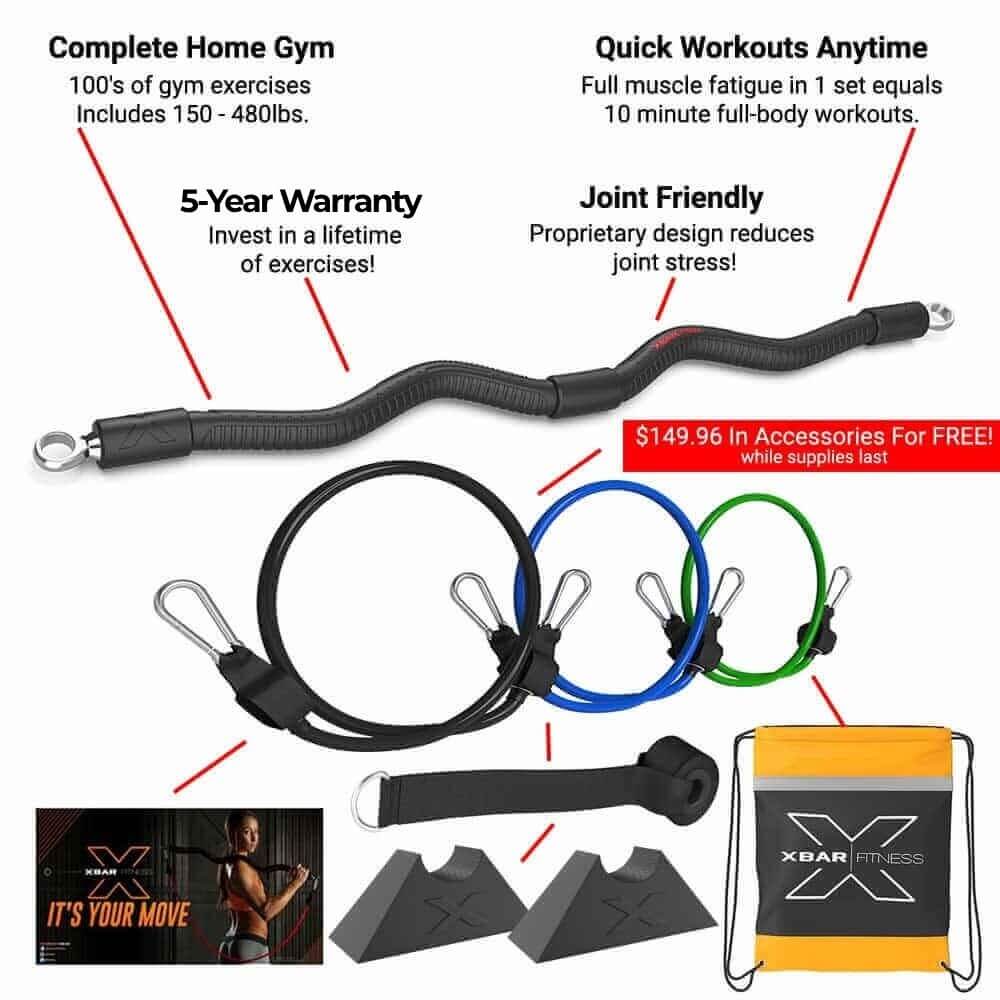
Ready to transform your chest workouts without expensive gym equipment? You've found the ultimate resource for resistance band chest exercises that deliver real results. Whether you're stuck at home, traveling, or just want the convenience of working out anywhere, resistance bands offer incredible muscle activation and strength gains that rival traditional weights. If you’ve got a resistance band set and a little floor space, you can create a complete chest day anywhere you go.
1. Why Resistance Bands Are Game-Changers for Your Chest Workouts
Let's be honest – building impressive pecs doesn't require a fancy gym membership or thousands of dollars in workout equipment. Resistance bands provide unique advantages that even free weights can't match. Band tension creates constant muscle contraction throughout the entire range of motion, leading to superior activation of your chest muscles.
Unlike traditional weights, where gravity only provides resistance in one direction, resistance bands create variable resistance that increases as you stretch them further. This means your pectoralis major and pectoralis minor work harder at the peak contraction, maximizing muscle growth potential.
The resistance band perks include:
- Portable home gym routines
- Adjustable resistance levels for all fitness levels
- Enhanced muscle activation through variable tension
- Joint-friendly movements that improve shoulder stability
- Cost-effective alternative to expensive gym equipment
2. Understanding Your Chest Anatomy for Better Results
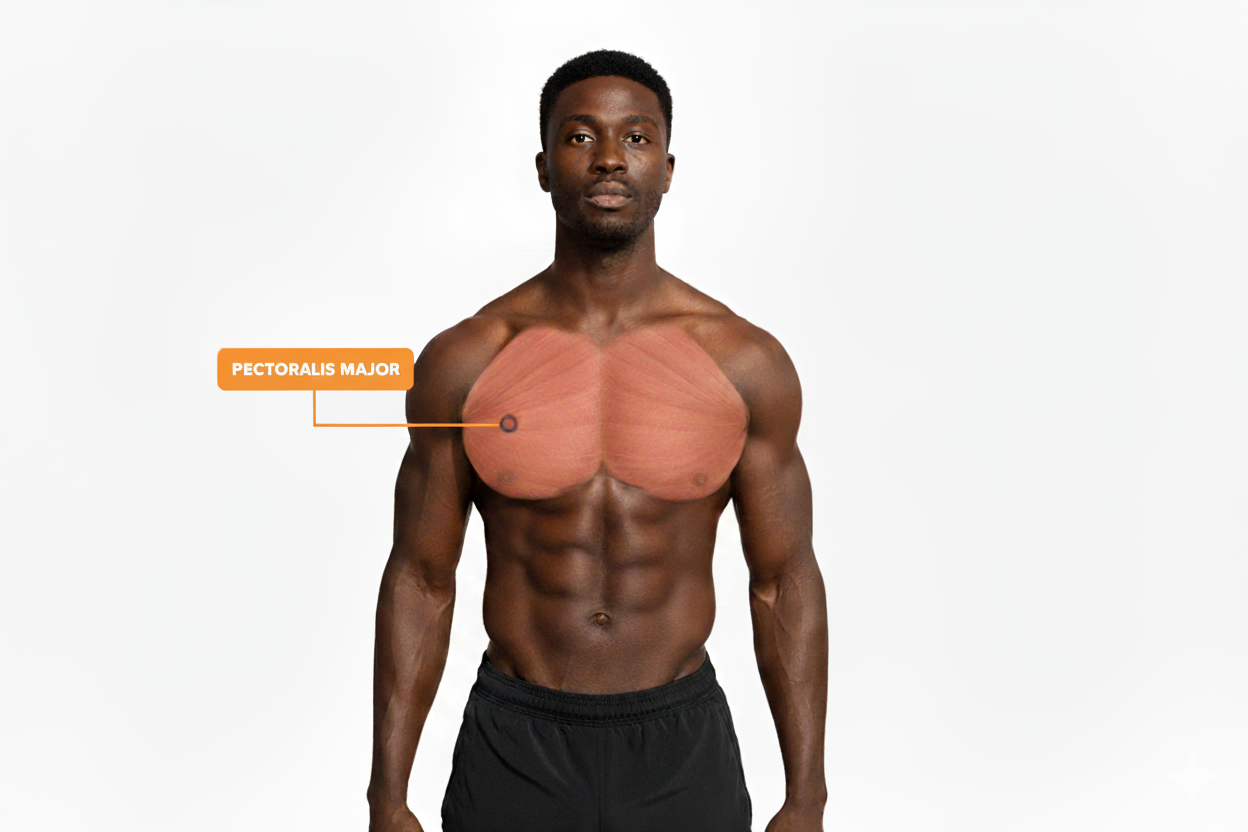
Before diving into specific chest exercises, let's quickly cover the chest anatomy to help you target the right muscles. Your chest muscles consist of several key players:
Pectoralis Major: The large, fan-shaped muscle that forms most of your chest. It has two heads – the clavicular (upper) and sternal (lower) portions that you can target with different chest height positions and angles.
Pectoralis Minor: A smaller muscle underneath the pectoralis major that helps with shoulder movement and stability.
Serratus Anterior: Often called the "boxer's muscle," this helps with reaching and punching movements while providing crucial shoulder stability.
Understanding these muscles helps you choose the right resistance band movements and maintain proper form for maximum chest muscle activation.
3. The 8 Most Effective Resistance Band Chest Exercises.
1. Resistance Band Chest Press
The foundation of all chest workouts, the resistance band chest press targets your entire pectoralis major while engaging your triceps and serratus anterior.
Setup: Anchor your resistance bands at chest height behind you. Step forward to create initial band tension.
Technique: Press forward with controlled movement, focusing on squeezing your pecs at the peak contraction. Control the negative portion for maximum muscle activation.
Sets and Reps: 3-4 sets of 12-15 reps
2. Resistance Band Bench Press (Floor Version)
This resistance band bench press variation allows you to train with heavier resistance loads while maintaining perfect form on the ground.
Setup: Lie on your back with the band anchored behind you or wrapped around your back.
Form Focus: Keep your core tight and shoulders stable throughout the range of motion.
Intensity: Adjust band tension by changing your position relative to the anchor point.
3. Resistance Band Chest Fly
Chest flys are incredible for isolating your pecs and creating that deep stretch that promotes muscle growth.
Technique: Start with arms wide, maintaining a slight bend in your elbows throughout the movement. Focus on the squeeze at the center.
Range of Motion: Go as wide as comfortable while maintaining control and proper form.
4. Standing Crossover Chest Fly
This resistance band chest fly variation adds a functional element while targeting different angles of your chest muscles.
5. High-to-Low Chest Press
Adjust your anchor point above chest height to target the lower portion of your pectoralis major.
6. Low-to-High Chest Press
Position your anchor point below chest height to emphasize the upper chest and clavicular head of the pectoralis major.
7. Single-Arm Chest Press
Unilateral training helps correct muscle imbalances while challenging your core and improving shoulder stability.
8. Resistance Band Push-Up
Combine bodyweight exercises with band resistance for an incredible muscle contraction challenge.
4. Chest Workout Routine.
Chest Pullover
We're going to hit different angles of the chest. The first one we're going to do is our chest pullover. So we're going to go to our anchor, and we're going to step forward for balance.
What we need to do is just arm straight the whole time and press down, all right. This is great for targeting the lower part of the chest. What we want here is just perfect posture, good form, chest out the whole time. And remember, you guys at home, use mind to muscle. Try to make sure that you're feeling this directly on your chest.
So we want to perform anywhere between 15 and 20 reps. Make sure you're controlling your tempo, not too fast, not too slow.
Chest Flys
Next up, what we're going to be doing is our chest flies using the same bands that we already have anchored to the back of the door. We're going to step forward once again.
We want to get a slight bend on our elbows this time around, and we want to start from up top and come low. Think of this as if you're going to give big bear hugs, okay. So we're going out.
Now, make sure that when you go out, you're not going too far out where it's actually uncomfortable on your shoulders, as that would actually lead to injury, and this is not what we want here. Once you come in, make sure you get a good squeeze and ride back out again, all right.
Band Pullaparts
This one is going to be the band pull apart. Now, in this case, what I'm going to want to do is I'm going to want to bend the band just ever so slightly so that way I start with my hands rather close to each other and what I'm going to want to do is I want to pull apart, arms straight, nothing else moves. On the way in, make sure that you're squeezing your chest, okay.
Chest Presses
For chest presses, we want to demonstrate this one with the bar, sliding it in front of us. All right, let's stand up with good posture.
The starting point should be the bar, as close to your chest as you can. Elbows out, and we want to put forward as far out as you can. The further out you go, the more resistance you should feel.
If you feel like you go all the way out and it's not enough resistance for you, feel free to switch to a heavier weighted exercise band.
Reverse Grip Chest Presses
The next exercise that I want to show you guys is a slight variation of this exercise. However, what I'm going to do is I'm going to go underhand grip and this is going to be called the reverse grip chest presses.
Same concept as before, bar starts right here as close to your chest as possible, push all the way out, bring them right back in. All the way out, right back in. All right, make sure you have a good tempo so that way once you start hitting about 15 to 20 reps you should be feeling the burn.
One slight variation to this exercise that I want to show you guys is let's say that you want to slide the bands a little lower behind your back and you start from a little lower as opposed to right in front of your chest, a little closer to your belly button and you want to press up.
Push-Ups
Next exercise is that we're going to be doing is push-ups.
The way that I'm going to be doing these push-ups is with my hands on the bar. Let's all make sure that we have great posture. You don't want to be hunching forward or hips too low.
Just make sure that you have a neutral spine and you're going all the way down and all the way back up. And for whatever reason, if you guys at home, if this is too hard on your wrist, feel free to go to the floor. Your shoulders should be right above your hands.
Chest Flys
Next up, we're going to be doing is our chest flies using the same bands that we already have anchored to the back of the door. We're going to step forward once again.
We want to get a slight bend on our elbows this time around, and we want to start from up top and come low, all right. So think of this as if you're going to give big bear hugs, okay. So we're going out.
Make sure that when you go out, you're not going too far out where it's actually uncomfortable on your shoulders, as that would actually lead to injury, and this is not what we want here, all right. Once you come in, make sure you get a good squeeze and ride back out again, all right.
5. Designing Your Complete Resistance Band Chest Workout Routine
Creating an effective home workout routine requires strategic planning of intensity, sets, reps, and exercise selection. Here's how to structure your resistance training sessions:
Warm-Up (5 minutes):
Start with light resistance band movements and dynamic stretches to prepare your chest muscles and improve shoulder mobility.
Main Workout (10-20 minutes):
- Choose 2-3 chest exercises from the list above
- Perform 2-3 sets of each exercise
- Aim for 15-20 reps depending on your resistance levels and goals
- Rest 60-90 seconds between sets
Intensity Progression:
- Week 1-2: Focus on mastering technique and form
- Week 3-4: Increase band tension or reps
- Week 5-6: Add more challenging variations or increase sets
- Week 7-8: Combine multiple resistance levels for advanced intensity
Cooldown (5 minutes):
Finish with gentle stretches focusing on your chest muscles, shoulders, and triceps to promote recovery and maintain flexibility.
6. Form and Technique: The Foundation of Muscle Growth
Perfect form is non-negotiable when it comes to resistance band training. Poor technique not only reduces muscle activation but can also lead to injury. Here are the key form principles:
- Maintain Constant Tension: Keep slight tension in the bands even at the starting position to maximize muscle contraction throughout the entire range of motion.
- Control the Negative: Resist the band's pull on the way back to starting position. This eccentric portion is crucial for muscle growth and strength gains.
- Proper Anchor Point Selection: Your anchor point height dramatically affects which part of your chest muscles you target. Experiment with different chest heights to hit various angles.
- Shoulder Stability: Keep your shoulders pulled back and down throughout all movements to protect your joints and maximize chest muscle activation.
7. Maximizing Your Results: Advanced Tips and Strategies
Progressive Overload with Resistance Bands: Unlike traditional weights, you'll need creative strategies to progressively overload your muscles:
- Pre-stretch the bands for increased starting tension
- Use multiple bands simultaneously
- Slow down your tempo for increased time under tension
- Increase reps before moving to higher resistance levels
Combining with Other Training: Resistance bands work incredibly well when combined with bodyweight exercises. Try supersetting band chest presses with push-ups for an intense muscle-building combination.
Frequency and Recovery: Train your chest with resistance bands 2-3 times per week, allowing at least 48 hours between sessions for optimal muscle recovery and growth.
FAQ
Can resistance bands really build muscle like weights?
Absolutely! Studies show that resistance band training can produce greater muscle growth and strength gains than traditional weights when proper intensity and progressive overload are used.
What resistance level should I start with?
Begin with light or medium resistance and focus on mastering proper form and technique. You can always increase intensity by adjusting your position or adding pre-stretch to the bands. And if you want to expand your setup even more, explore all XBAR products.
How do I know if I'm using enough resistance?
The last 2-3 reps of each set should be challenging while maintaining perfect form. If you can easily complete all reps, increase the band tension or resistance level.
Can I train chest every day with resistance bands?
It's not advisable. Your chest muscles need 48-72 hours to recover between intense sessions. Focus on 2-3 chest workouts per week for optimal muscle gain and strength development.
What's the best anchor point height for chest exercises?
Chest height targets the middle pecs, above chest height emphasizes upper chest, and below chest height focuses on lower chest. Vary your anchor points for complete development.
Start Your Transformation Today
Ready to experience the incredible convenience and effectiveness of resistance band chest exercises? You have everything you need to build impressive chest strength and muscle growth right from your home.
The beauty of resistance band training lies in its simplicity and effectiveness. No more excuses about not having time to get to the gym or lacking expensive workout equipment. Your journey to a stronger, more defined chest starts with your very next workout.
Take action now: Grab your resistance bands and try the complete workout routine outlined above. Start with proper form, focus on muscle activation, and progressively increase your intensity. Your chest muscles will thank you, and you'll be amazed at the results you can achieve with this versatile, convenient training method.
Ready to transform your home chest workouts? Get started today and experience the power of resistance band training for yourself!